
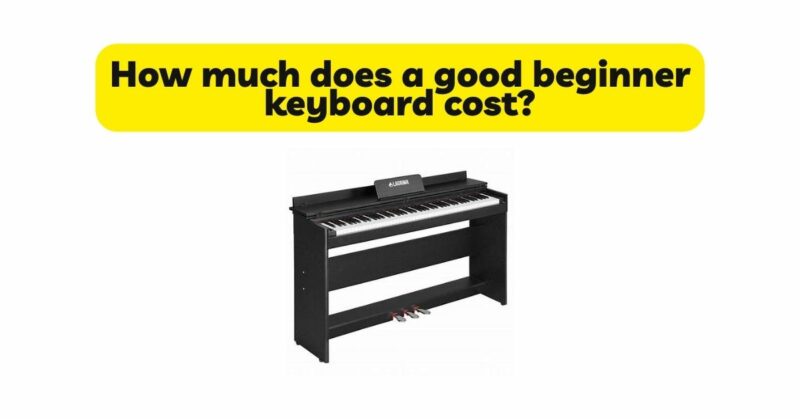
As a beginner embarking on a journey to learn the keyboard, finding the right instrument that suits your needs and budget is essential. The cost of a beginner keyboard can vary based on factors such as quality, features, and brand. In this article, we will explore the cost considerations for a good beginner keyboard, helping you make an informed decision and invest in an instrument that supports your musical aspirations without breaking the bank.
- Price Range for Beginner Keyboards: The cost of a good beginner keyboard can range from approximately $100 to $500. Within this price range, you can find keyboards that offer the necessary features and quality to support your learning process. It’s important to strike a balance between affordability and ensuring that the keyboard meets your requirements as a beginner.
- Brand and Quality: The brand and quality of a beginner keyboard can influence its cost. Established brands with a reputation for producing high-quality instruments often command higher prices due to the research, development, and craftsmanship invested in their products. While reputable brands may offer more expensive keyboards, they generally provide better sound quality, durability, and customer support.
- Number of Keys: Beginner keyboards typically come with a range of 61 to 76 keys. These keyboards offer sufficient range for beginners to learn and practice a wide variety of music. While keyboards with a full 88-key range exist, they tend to be more expensive and are often preferred by more advanced players or those specifically focused on classical piano.
- Key Action and Sensitivity: Key action refers to the mechanism that determines how the keys respond when pressed. Entry-level keyboards generally feature non-weighted or semi-weighted keys. Weighted keys simulate the feel of an acoustic piano, but they are typically found in more advanced and higher-priced keyboards. For beginners, non-weighted or semi-weighted keys are suitable for learning the basics and building finger strength.
- Built-in Speakers: Beginner keyboards often come with built-in speakers, allowing you to hear the sound without additional amplification. However, the quality and power of the built-in speakers can vary across different models. Consider your needs and whether you may want to connect external speakers or headphones for better sound quality or privacy during practice.
- Touch Sensitivity: Touch sensitivity refers to the ability of a keyboard to detect the force with which keys are played and produce sound accordingly. Keyboards with touch sensitivity enable dynamic playing, where softer touches result in quieter sounds and harder touches produce louder sounds. Many beginner keyboards offer touch sensitivity as a standard feature, allowing you to develop control and expressiveness in your playing.
- Built-in Features and Functions: Good beginner keyboards often provide built-in features and functions to enhance the learning experience. These can include metronomes, built-in lessons, learning modes, accompaniment styles, and pre-set sounds. While these features are not essential, they can provide valuable tools for practicing and exploring different musical styles.
- Connectivity and Expansion: Consider the connectivity options available on the keyboard. Beginner keyboards may include USB ports for connecting to computers, MIDI connectivity for recording and integrating with music software, and audio inputs/outputs for connecting to external speakers or amplifiers. These options can expand the functionality and versatility of the keyboard as you progress in your musical journey.
- Included Accessories: Some beginner keyboards come bundled with accessories such as a stand, bench, sustain pedal, headphones, or learning materials. While these accessories may add to the overall cost of the keyboard, they can provide convenience and save you from purchasing them separately.
- Consideration for Long-Term Use: When investing in a beginner keyboard, it’s important to consider your long-term goals and potential future needs. If you foresee yourself progressing quickly or aiming to explore advanced techniques, you may want to invest in a keyboard with additional features and better quality to accommodate your growth.
Conclusion: A good beginner keyboard can be found within the price range of $100 to $500. Consider factors such as brand and quality, number of keys, key action and sensitivity, built-in speakers, touch sensitivity, built-in features and functions, connectivity options, included accessories, and your long-term goals when making a decision. Remember, the most important aspect is finding a keyboard that provides a comfortable playing experience, suits your learning needs, and inspires you to continue progressing on your musical journey. By considering these cost considerations, you can make a wise investment in a beginner keyboard that will support your growth and enjoyment of playing the keyboard.