
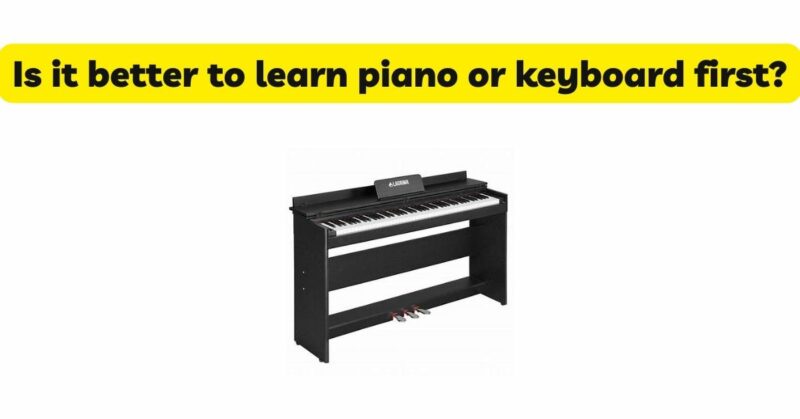
Embarking on the journey of learning a musical instrument is a thrilling endeavor, and for aspiring musicians, the question often arises: is it better to learn piano or keyboard first? In this article, we will explore the considerations, advantages, and potential benefits of starting with piano or keyboard as a beginner. By understanding the unique characteristics, learning opportunities, and personal preferences, beginners can make an informed decision that sets them on a path to musical growth and enjoyment.
- Learning Fundamentals and Musical Concepts: When considering whether to learn piano or keyboard first, it is essential to understand that both instruments offer valuable learning opportunities. Learning piano as a beginner provides a strong foundation in music theory, note reading, and understanding musical concepts such as melody, harmony, and rhythm. The piano’s layout, with its distinct keys and visual arrangement, allows beginners to grasp these fundamental concepts effectively. On the other hand, keyboards offer versatility and a wide range of sounds and effects that can spark creativity and exploration of different musical genres. Ultimately, the choice depends on your musical goals, preferences, and desired learning experience.
- Instrument Characteristics: Understanding the characteristics of the piano and keyboard is crucial when deciding which instrument to learn first. Pianos, particularly acoustic pianos, offer a touch-sensitive keyboard and weighted keys that facilitate proper technique development and dynamic control. The tactile experience of playing a piano is unmatched, allowing beginners to develop finger strength, dexterity, and expressive playing. Keyboards, while they may vary in key action and touch sensitivity, often provide a lighter touch and a broader range of sound options, including different instrument sounds and effects. These characteristics offer versatility and the ability to explore various musical styles and genres.
- Accessibility and Affordability: Accessibility and affordability play significant roles in the decision-making process for many beginner musicians. Pianos, especially acoustic pianos, require a dedicated space and can be more expensive to purchase and maintain. They are often larger and heavier, making them less portable and suitable for learners with limited space. Keyboards, on the other hand, are generally more accessible and affordable. They are portable, compact, and often more budget-friendly, making them a practical choice for beginners who may have space constraints or limited financial resources. Consider your available space, budget, and long-term commitment when deciding which instrument to learn first.
- Technique Development: Developing proper technique is essential for beginners, as it forms the foundation for future progress and musical expression. Acoustic pianos, with their weighted keys and touch-sensitive action, provide an ideal platform for developing finger strength, control, and dynamic playing. The tactile feedback of the keys and the responsiveness of the instrument allow beginners to refine their technique and develop a deep understanding of touch and sound production. Keyboards, while they may have lighter keys and different touch sensitivity, can still facilitate technique development. Keyboards with weighted keys or graded hammer action can provide a similar tactile experience to acoustic pianos, allowing beginners to develop finger strength and control. Regardless of the instrument chosen, consistent practice and guidance from a qualified teacher are key to developing proper technique.
- Musical Exploration and Versatility: Both pianos and keyboards offer unique opportunities for musical exploration and versatility. Pianos, with their distinct sound and touch, excel in classical music repertoire, allowing beginners to dive into the works of renowned composers. The piano’s expressive capabilities and the ability to produce a broad range of dynamics make it an ideal instrument for studying classical music. Keyboards, on the other hand, provide versatility in terms of sound options, effects, and musical genres. They offer a platform to explore different instrument sounds, experiment with contemporary styles, and even compose or arrange music. Consider your musical interests, preferred genres, and desire for experimentation when deciding which instrument to learn first.
- Personal Preferences and Learning Style: Personal preferences and learning style should not be overlooked when making a decision between learning piano or keyboard first. Consider the type of music that resonates with you, your preferred playing style, and the overall experience you seek as a beginner musician. If you are drawn to classical music, appreciate the touch and sound of an acoustic piano, and desire a more focused and traditional learning approach, starting with the piano may be the best choice. Conversely, if you are interested in exploring different genres, experimenting with sounds and effects, and prefer a more versatile and contemporary approach to learning, starting with a keyboard may be more suitable. Reflecting on your musical inclinations, as well as your motivation and dedication to practice, will help guide your decision.
Conclusion: The decision of whether to learn piano or keyboard first is subjective and depends on various factors, including your musical goals, preferences, learning style, and resources. Both instruments offer unique advantages and opportunities for beginners. Pianos provide a strong foundation in music theory, note reading, and proper technique development, particularly for classical music enthusiasts. Keyboards offer versatility, affordability, and a wide range of sounds, fostering exploration and experimentation across different musical genres. Ultimately, the choice should align with your aspirations and desired learning experience. Regardless of the instrument chosen, remember that consistent practice, guidance from a qualified teacher, and a passion for music are key to your growth as a musician.