
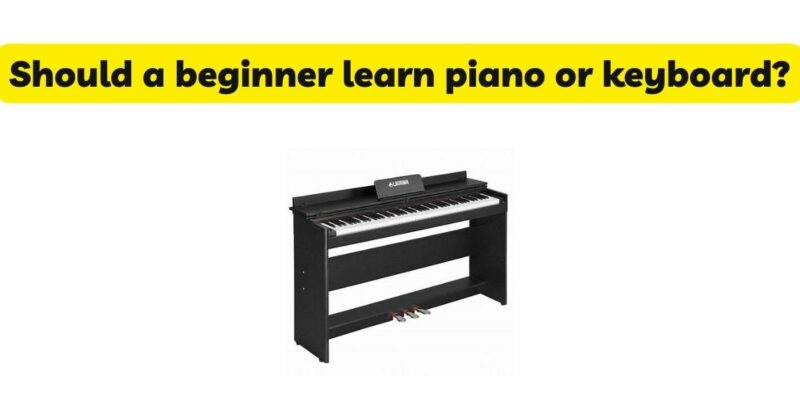
Embarking on the journey of learning a musical instrument is an exciting endeavor, and for aspiring musicians, the question often arises: should a beginner learn piano or keyboard? In this article, we will explore the considerations, advantages, and potential challenges associated with learning piano or keyboard as a beginner. By understanding the unique characteristics, learning opportunities, and personal preferences, beginners can make an informed decision that aligns with their musical aspirations, goals, and learning styles.
- Accessibility and Affordability: Accessibility and affordability are crucial factors to consider when choosing an instrument as a beginner. Keyboards are generally more accessible and affordable compared to pianos. Keyboards are compact, lightweight, and portable, allowing beginners to practice and play anytime, anywhere. They are often more affordable, making them a suitable option for those who are starting their musical journey or have budget constraints. On the other hand, pianos, particularly acoustic pianos, require a dedicated space and can be more expensive to purchase and maintain. Consider your space availability, financial resources, and long-term commitment when making your decision.
- Learning Tools and Resources: Both pianos and keyboards offer a range of learning tools and resources to support beginners. Keyboards often come with built-in tutorials, interactive learning modes, and practice features that guide beginners through the fundamental concepts of playing the piano. These built-in tools provide step-by-step instructions, practice exercises, and visual aids to facilitate learning. Pianos, while lacking built-in features, offer a wealth of external resources such as books, online tutorials, and instructional videos tailored to beginner musicians. Consider the availability and suitability of learning resources for each instrument when making your choice.
- Key Action and Touch Sensitivity: Key action and touch sensitivity play a significant role in the playing experience and technique development. Acoustic pianos, with their weighted keys and mechanical action, provide a more authentic touch and response. They require finger strength, control, and proper technique, allowing beginners to develop the necessary foundations for expressive playing. Keyboards, depending on the model, may have lighter keys or different levels of touch sensitivity. Some keyboards, however, are equipped with weighted keys or graded hammer action to replicate the feel of an acoustic piano. While keyboards may not fully replicate the touch sensitivity of pianos, they can still provide a suitable learning experience for beginners.
- Sound Quality and Expression: Sound quality and expression are essential aspects of music performance. Acoustic pianos produce a rich and resonant sound that is highly regarded for its depth and complexity. The interaction between the strings, hammers, and soundboard contributes to the unique tonal qualities of pianos. Keyboards, while not identical to the sound of an acoustic piano, have made remarkable progress in sound sampling technology. High-quality keyboards aim to reproduce the sound of pianos, offering a satisfying playing experience. Additionally, keyboards often provide a variety of instrument sounds and effects, allowing beginners to explore different musical styles and genres.
- Technique Development: Developing proper technique is crucial for beginners, as it forms the foundation for future progress. Acoustic pianos, with their weighted keys and mechanical action, can assist in developing finger strength, control, and proper hand posture. The touch-sensitive keys of pianos enable beginners to refine their dynamics and expression. Keyboards, while they may have lighter keys, can still facilitate technique development. Keyboards with weighted keys or graded hammer action can provide a similar tactile experience to acoustic pianos, allowing beginners to develop finger strength and control. Consistent practice, regardless of the instrument chosen, is key to developing technique and proficiency.
- Long-Term Goals and Musical Aspirations: Consider your long-term goals and musical aspirations when deciding between piano and keyboard as a beginner. If you aspire to pursue advanced classical piano repertoire, perform on a grand stage, or study piano at a professional level, investing in an acoustic piano may be more appropriate. Acoustic pianos provide an authentic playing experience and the touch and sound characteristics required for advanced piano performance. However, if your goals involve exploring various musical genres, composing, arranging, or performing in different settings, a keyboard may be a practical choice. Keyboards offer versatility, portability, and affordability that can support a range of musical endeavors.
- Personal Preferences and Learning Style: Personal preferences and learning style should not be overlooked when choosing an instrument as a beginner. Consider the type of music you enjoy and the playing style that resonates with you. If you are drawn to classical repertoire and appreciate the touch and sound of an acoustic piano, learning on a piano may be more fulfilling. However, if you are interested in exploring various genres, experimenting with different sounds and effects, or prefer a more modern and versatile instrument, a keyboard may better suit your preferences. Reflect on your musical inclinations, as well as your motivation and dedication to practice, to guide your decision.
Conclusion: Choosing between learning piano or keyboard as a beginner requires careful consideration of factors such as accessibility, affordability, learning tools, key action, touch sensitivity, sound quality, long-term goals, and personal preferences. Keyboards offer accessibility, affordability, and a range of technological features that can support beginners in their musical journey. Acoustic pianos provide an authentic touch and sound experience that can greatly enhance technique development and expression. Ultimately, the decision should align with your specific circumstances, goals, and learning style. Regardless of the instrument chosen, remember that consistent practice, guidance from a qualified teacher, and a passion for music are essential elements for your growth as a musician.