
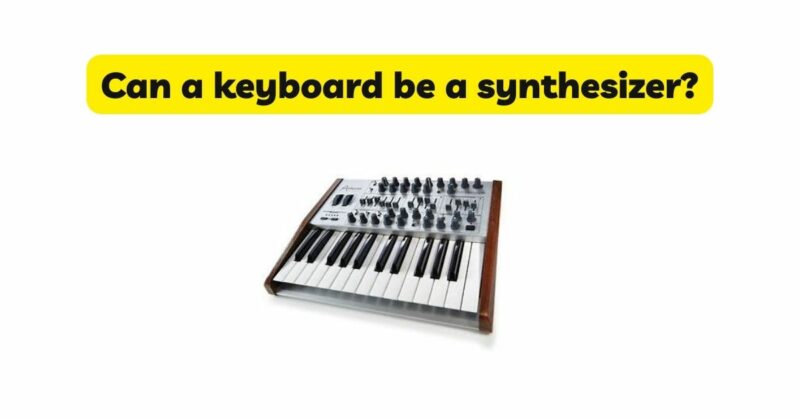
The terms “keyboard” and “synthesizer” are often used interchangeably, leading to confusion among musicians and enthusiasts. While they share similarities, it is important to understand the distinctions between the two. In this article, we will explore the relationship between keyboards and synthesizers and address the question: Can a keyboard be a synthesizer?
I. Understanding Keyboards: Keyboards are a broad category of musical instruments that feature a set of keys arranged in a piano-like layout. They encompass various instruments, including digital pianos, electric pianos, stage pianos, and MIDI controllers. Key features of keyboards include:
- Emulation of Acoustic Pianos: Digital pianos and stage pianos, in particular, are designed to replicate the sound and playing experience of acoustic pianos. They employ advanced sampling and modeling techniques to capture the nuances and characteristics of acoustic piano tones. Keyboards prioritize authentic piano sounds as their primary focus.
- Additional Instrument Sounds: Many keyboards offer a range of additional instrument sounds beyond piano tones. These may include strings, organs, guitars, brass, and more. While these sounds are typically sampled or synthesized, they are secondary to the primary focus of emulating piano tones.
- Performance Features: Keyboards often incorporate performance features such as built-in metronomes, recording capabilities, connectivity options, and weighted or semi-weighted keys that mimic the touch and response of an acoustic piano. These features support expressive playing and the exploration of different piano techniques.
II. Understanding Synthesizers: Synthesizers, on the other hand, are electronic musical instruments that generate and manipulate sound through various synthesis techniques. Key characteristics of synthesizers include:
- Sound Generation and Manipulation: Synthesizers use oscillators, filters, envelopes, modulation, and other techniques to create and manipulate sound electronically. They excel in producing a wide range of tones, from traditional instrument sounds to experimental and otherworldly timbres. Synthesizers offer extensive control over sound design parameters, allowing musicians to sculpt and shape their sounds.
- Programmability and Sound Design: Many synthesizers are programmable, allowing users to create and store custom patches or presets. This feature enables musicians to modify parameters such as waveform selection, filter settings, modulation sources, and effects. Synthesizers prioritize sound design and the creation of unique timbres rather than faithfully reproducing the nuances of acoustic instruments.
- Performance and Real-Time Control: Synthesizers often include performance features such as arpeggiators, sequencers, and real-time control options like modulation wheels, sliders, and touch-sensitive surfaces. These features empower musicians to shape their sound dynamically during live performances or studio recordings, adding expressiveness and versatility to their compositions.
III. The Overlap: Can a Keyboard Be a Synthesizer? While keyboards and synthesizers have distinctive characteristics, there is overlap between the two. Modern keyboards, particularly those with advanced features, can incorporate limited synthesizer functionalities. Here are some points of overlap:
- Synthesizer-Style Sound Editing: Certain keyboards allow users to modify sound parameters to a limited extent. This may include adjusting filter cutoff, resonance, envelope settings, or adding basic effects. While not as extensive as a dedicated synthesizer, these editing capabilities provide some level of sound manipulation.
- Layering and Splitting Sounds: Many keyboards, especially stage pianos and higher-end digital pianos, allow for layering multiple sounds or splitting the keyboard into different zones, each with a different sound assigned to it. This functionality resembles the capability of combining different sounds in a synthesizer setup.
- Integration with Synthesizer Modules: Some keyboards offer compatibility with external synthesizer modules or software synthesizers. This allows users to expand their sonic palette by incorporating dedicated synthesizer sounds and functionalities into their keyboard setup.
IV. Differentiating Keyboards and Synthesizers: While there may be overlap between keyboards and synthesizers, it is essential to understand their primary functions and intended purposes. Here are the key distinctions:
- Sound Focus: Keyboards prioritize authentic piano sounds, with additional instrument sounds serving as secondary options. They aim to replicate the sound and playing experience of acoustic pianos. Synthesizers, on the other hand, focus on sound design and creating a wide range of tones, going beyond traditional instrument sounds.
- Sound Manipulation: Keyboards offer limited sound manipulation capabilities compared to synthesizers. While they may provide basic editing options, their primary focus remains on emulating pre-existing sounds. Synthesizers provide extensive control over sound design parameters, allowing for the creation and manipulation of unique and complex tones.
- Performance Features: Keyboards often prioritize performance features that enhance piano playing techniques and dynamics. Synthesizers, while also offering performance features, place a greater emphasis on real-time sound manipulation and control options, enabling musicians to shape their sound during live performances or studio recordings.
V. Conclusion: In conclusion, the distinction between a keyboard and a synthesizer lies in their primary functions and sound priorities. Keyboards, such as digital pianos and stage pianos, aim to replicate the sound and playing experience of acoustic pianos, with additional instrument sounds as secondary options. They often offer limited sound editing capabilities.
Synthesizers, on the other hand, prioritize sound design and the creation of unique and innovative tones. They provide extensive control over sound parameters, effects, and real-time manipulation options. Synthesizers excel in generating a wide range of sounds beyond traditional instrument tones.
While keyboards can incorporate some synthesizer functionalities and provide a starting point for sound exploration, dedicated synthesizers offer a broader range of sound design possibilities and control options. Ultimately, the choice between a keyboard and a synthesizer depends on your musical goals, desired sound palette, and the extent of sound manipulation and creativity you seek.