
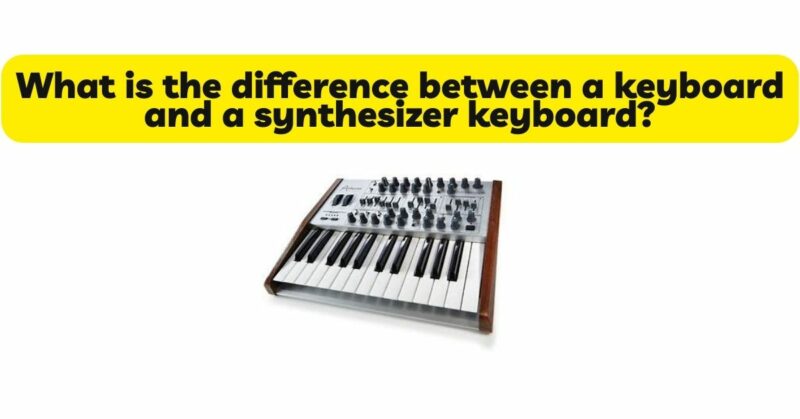
In the world of music, the terms “keyboard” and “synthesizer keyboard” are often used interchangeably, leading to confusion among musicians and enthusiasts. However, there are key differences between the two. In this article, we will delve into the distinctions between a keyboard and a synthesizer keyboard, shedding light on their unique characteristics and functionalities.
I. Understanding Keyboards: A keyboard, in its broadest sense, refers to an instrument featuring a set of keys arranged in a piano-like layout. Keyboards encompass a variety of instruments, including digital pianos, electric pianos, stage pianos, and MIDI controllers. Here are some key features of keyboards:
- Emulating Acoustic Pianos: Keyboards, particularly digital pianos and stage pianos, focus on emulating the sound and playing experience of acoustic pianos. They employ advanced sampling and modeling techniques to reproduce the nuances and characteristics of acoustic piano tones. Authentic piano sound reproduction is the primary objective of keyboards.
- Additional Instrument Sounds: While keyboards primarily focus on piano sounds, they often offer a range of additional instrument sounds such as strings, organs, guitars, brass, and more. These sounds are typically sampled or synthesized, providing a versatile palette of instrument choices. However, these additional sounds are secondary to the primary focus of emulating piano tones.
- Performance Features: Keyboards incorporate various performance features that enhance the piano playing experience. These may include built-in metronomes, recording capabilities, connectivity options, and weighted or semi-weighted keys that mimic the touch and response of an acoustic piano. Performance features are geared towards expressive playing and exploring different piano techniques.
II. Understanding Synthesizer Keyboards: A synthesizer keyboard, also known as a “synth keyboard,” is a specific type of keyboard that incorporates synthesizer functionalities. While similar in appearance to a standard keyboard, a synthesizer keyboard focuses on sound design and provides extensive control over sound parameters. Here are some key features of synthesizer keyboards:
- Sound Generation and Manipulation: Synthesizer keyboards employ various synthesis techniques to generate and manipulate sound electronically. They use oscillators, filters, envelopes, modulation, and other methods to create unique and innovative tones. Synthesizer keyboards offer extensive control over sound parameters, allowing musicians to sculpt and shape their sounds to their liking.
- Programmability and Sound Design: Many synthesizer keyboards are programmable, allowing users to create and store custom patches or presets. This capability enables musicians to modify parameters such as waveform selection, filter settings, modulation sources, and effects. Sound design is a primary focus of synthesizer keyboards, allowing for the creation of unique timbres and textures.
- Performance and Real-Time Control: Synthesizer keyboards often include performance features that enhance real-time sound manipulation and control options. These may include arpeggiators, sequencers, modulation wheels, sliders, touch-sensitive surfaces, and other performance-oriented controls. These features empower musicians to shape their sound dynamically during live performances or studio recordings, adding expressiveness and versatility to their compositions.
III. Differences between Keyboards and Synthesizer Keyboards: While keyboards and synthesizer keyboards share some similarities, there are distinct differences between the two. These differences revolve around their primary focus, sound manipulation capabilities, and design principles. Here are the key distinctions:
- Sound Focus: Keyboards prioritize authentic piano sounds, with additional instrument sounds as secondary options. Their primary objective is to emulate the sound and playing experience of acoustic pianos. Synthesizer keyboards, on the other hand, focus on sound design and the creation of unique tones beyond traditional instrument sounds.
- Sound Manipulation: Keyboards, while they may offer limited sound editing capabilities, primarily emphasize emulating pre-existing sounds. Synthesizer keyboards, in contrast, provide extensive control over sound design parameters. They offer the ability to shape and manipulate sounds using various synthesis techniques, effects, and real-time control options.
- Programmability: While some keyboards may be programmable to a limited extent, synthesizer keyboards are specifically designed for extensive programmability. They allow users to create and store custom patches or presets, providing flexibility and the ability to reproduce specific sound designs.
- Performance Features: Keyboards focus on performance features that enhance piano playing techniques and dynamics. These features may include weighted or semi-weighted keys, touch-sensitive response, and built-in metronomes. Synthesizer keyboards, while also incorporating performance features, prioritize real-time sound manipulation and control options, allowing musicians to shape their sound dynamically during performances.
IV. Choosing the Right Instrument for You: When considering whether to choose a keyboard or a synthesizer keyboard, several factors come into play. Here are some considerations to help you make an informed decision:
- Musical Goals and Preferences: If your primary musical focus centers on piano playing and you aspire to reproduce authentic piano sounds, a keyboard, such as a digital piano or stage piano, would be a suitable choice. On the other hand, if you are drawn to sound design, creating unique and innovative tones, and exploring a wide range of sonic possibilities, a synthesizer keyboard is the ideal instrument for you.
- Sound Versatility and Exploration: Keyboards offer a range of additional instrument sounds but primarily excel in emulating piano tones. If you seek a broader sonic palette and desire to push the boundaries of traditional instrument sounds, a synthesizer keyboard provides the tools and capabilities for sound exploration and experimentation.
- Sound Manipulation and Creativity: If you are passionate about shaping and designing your own sounds, a synthesizer keyboard is the instrument that will allow you to delve deep into sound manipulation. The extensive control over parameters, programmability, and real-time control options of synthesizer keyboards empower you to unleash your creativity and create unique sonic textures.
V. Conclusion: In conclusion, the difference between a keyboard and a synthesizer keyboard lies in their primary focus, sound manipulation capabilities, and design principles. Keyboards prioritize emulating piano sounds, with additional instrument sounds as secondary options. They often offer limited sound editing capabilities and are geared towards authentic piano reproduction.
Synthesizer keyboards, on the other hand, emphasize sound design and manipulation. They provide extensive control over sound parameters, programmability, and real-time control options, allowing musicians to create unique and innovative tones beyond traditional instrument sounds.
When choosing between a keyboard and a synthesizer keyboard, consider your musical goals, preferences, and the specific sonic possibilities you wish to explore. Both instruments have their unique strengths, and the choice ultimately depends on your desired sound palette, creative aspirations, and the musical path you wish to embark upon.