
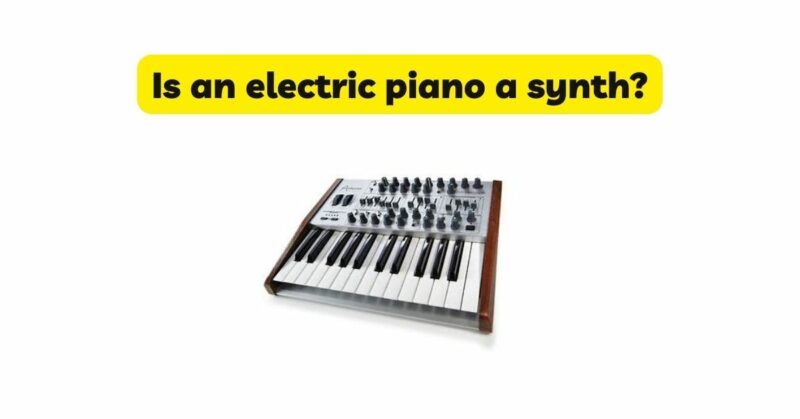
In the world of musical instruments, the terms “electric piano” and “synthesizer” are often used interchangeably, leading to confusion among musicians and enthusiasts. While both instruments fall under the umbrella of electronic keyboards, they have distinct characteristics and serve different purposes. In this article, we will explore the features and functionalities of electric pianos and synthesizers to clarify the question: Is an electric piano a synthesizer?
I. Understanding Electric Pianos: Electric pianos, also known as “electronic pianos,” emerged in the mid-20th century as an alternative to acoustic pianos. They were designed to replicate the sound and feel of traditional pianos while introducing practical advantages. Key features of electric pianos include:
- Tine or Hammer Action: Electric pianos employ various keyboard actions to mimic the touch and response of acoustic pianos. Tine-based electric pianos, such as the Fender Rhodes and Wurlitzer, use metal tines and hammers to generate sound when struck by the keys. This mechanism creates a unique and characteristic tone.
- Amplification and Speaker System: Unlike acoustic pianos, electric pianos require amplification to produce audible sound. They often incorporate built-in speaker systems or can be connected to external amplifiers or sound systems. This feature allows for increased volume and the ability to project sound in various performance settings.
- Emulation of Piano Sounds: Electric pianos aim to faithfully reproduce the sound of acoustic pianos. Through innovative engineering, they capture the timbral nuances and dynamics of acoustic instruments, offering musicians a portable and versatile option for performance and recording.
II. Unveiling Synthesizers: Synthesizers are electronic instruments that generate and manipulate sound through various synthesis techniques. Unlike electric pianos, synthesizers are highly programmable and offer musicians extensive control over sound creation. Key characteristics of synthesizers include:
- Sound Generation and Manipulation: Synthesizers employ oscillators, filters, envelopes, and modulation techniques to generate and shape sound. They provide users with the ability to create a wide range of tones, including traditional instrument sounds, as well as experimental and otherworldly timbres. This versatility has made synthesizers integral to various music genres, including electronic, pop, and ambient.
- Programmability and Sound Design: Synthesizers excel in programmability, allowing users to create and store custom patches or presets. Musicians can modify parameters such as waveform selection, filter settings, modulation sources, and effects, giving them unparalleled flexibility and the ability to craft unique and evolving sounds.
- Performance and Real-Time Control: Synthesizers often include performance features like keyboard splits, layering, and the ability to control parameters in real-time using knobs, sliders, or touch-sensitive surfaces. These features empower musicians to shape their sound during live performances and studio recordings, adding expressiveness and depth to their compositions.
III. Bridging the Gap: While electric pianos and synthesizers have distinctive characteristics, there are instances where they intersect. Modern electric pianos often incorporate limited synthesizer functionalities, such as the ability to layer sounds, apply effects, or modify the sound using basic synthesis techniques. However, it is important to note that these features are secondary to the primary purpose of emulating the sound and playing experience of an acoustic piano.
On the other hand, synthesizers can include sampled piano sounds, allowing musicians to access authentic piano tones alongside their vast sound design capabilities. However, synthesizers prioritize sound synthesis and the creation of unique timbres rather than faithfully reproducing the nuances of acoustic pianos.
IV. Conclusion: In conclusion, the distinction between an electric piano and a synthesizer lies in their primary function and focus. An electric piano is designed to replicate the sound and feel of an acoustic piano, often incorporating specialized keyboard actions and amplification systems. Its aim is to provide a portable and practical alternative to traditional pianos.
On the other hand, synthesizers prioritize sound synthesis and manipulation, offering musicians extensive control over the creation of new and diverse sounds. They excel in programmability, performance features, and real-time sound manipulation.
While there may be some overlap in functionality, particularly in modern instruments, understanding the core differences between electric pianos and synthesizers is essential for musicians seeking the instrument that best suits their musical needs. Whether it is the desire for authentic piano emulation or the exploration of boundless sonic possibilities, both electric pianos and synthesizers hold their unique places in the landscape of electronic keyboards and musical expression.