
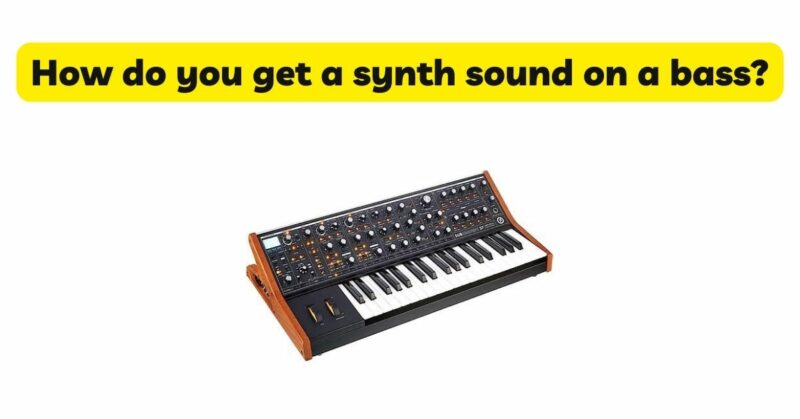
The integration of synthesizer sounds with the bass guitar has become increasingly popular in modern music. This fusion of electronic and traditional elements allows bass players to explore new sonic territories and add depth and texture to their playing. In this article, we will delve into various techniques to achieve synth sounds on a bass guitar. By understanding these techniques, bass players can unlock a world of creative possibilities and expand their sonic palette.
- Signal Processing and Effects: Signal processing and effects play a crucial role in shaping the bass guitar’s sound and transforming it into a synth-like tone. By utilizing effects pedals, bass players can simulate the characteristics of synthesizers. Effects such as envelope filters, octavers, ring modulators, and pitch-shifters can create sweeping filter sweeps, deep sub-bass tones, and rich harmonies. Experimenting with different combinations of effects pedals allows bass players to find the right blend for achieving synth-like sounds.
- Synth Pedals and Modules: Synth pedals and modules specifically designed for bass guitars provide an excellent opportunity to explore a wide range of synth sounds. These devices often feature various synthesis techniques, including subtractive, FM, and wavetable synthesis. Bass players can use these pedals or modules to generate rich and complex synth tones while retaining the expressiveness and dynamics of their playing. Synth pedals offer an easy and convenient way to integrate synth sounds directly into a bass guitar setup.
- MIDI Conversion and Triggering: MIDI conversion and triggering systems enable bass players to control external synthesizers or virtual instruments using their bass guitar. By using MIDI pickups or MIDI converters, the bass guitar’s signal can be converted into MIDI data, allowing for the triggering of synthesized sounds. This technique opens up endless possibilities, as bass players can access an extensive library of synth sounds and textures, and even perform complex multi-layered arrangements.
- Playing Techniques: Exploring different playing techniques can also contribute to achieving synth-like sounds on a bass guitar. Techniques such as tapping, two-handed tapping, and slapping can produce fast and percussive sounds reminiscent of electronic synth lines. Additionally, using a pick or playing with the palm muting technique can create a tight and focused sound that emulates the characteristics of synthesizers. Experimenting with various playing techniques allows bass players to emulate the rhythmic and percussive qualities commonly associated with synths.
- String Manipulation and Extended Techniques: Manipulating the strings and employing extended techniques on the bass guitar can yield unique and synth-like sounds. Techniques such as string bending, harmonics, and fretboard tapping can create expressive and ethereal tones. Sliding between notes, glissandos, and creating pitch bends using the whammy bar or bending the neck add a sense of modulation and pitch modulation found in synthesized sounds. By pushing the boundaries of traditional bass playing, musicians can achieve a distinctive and synth-like sonic palette.
- Equalization and Filtering: Equalization and filtering techniques can be used to shape the bass guitar’s tone and emphasize certain frequencies to achieve synth-like characteristics. By boosting the upper midrange frequencies, bass players can add brightness and presence to the sound, emulating the sawtooth waveforms commonly associated with synthesizers. Conversely, rolling off the high frequencies and boosting the low frequencies can create a warm and rounded tone, reminiscent of analog synth sounds. Experimenting with equalization and filtering settings allows bass players to customize the sound to achieve their desired synth-like qualities.
- Layering and Sound Design: Layering different sounds and textures is an effective technique for achieving synth-like tones on a bass guitar. Bass players can combine their clean bass signal with synthesized sounds or sampled textures to create unique and hybrid tones. By blending the organic qualities of the bass guitar with the synthetic elements, musicians can produce complex and captivating sonic textures that push the boundaries of traditional bass playing.
- Hybrid Instruments: Hybrid instruments, such as the Roland GR-series guitars or the Moog Taurus bass pedals, offer a dedicated combination of bass guitar and synthesizer functionalities. These instruments allow bass players to access synth sounds while retaining the feel and playability of a traditional bass guitar. Hybrid instruments often feature dedicated synthesis engines, customizable presets, and built-in effects, providing an all-in-one solution for achieving synth-like sounds on a bass guitar.
- Studio Techniques and Post-Production: In the studio, bass players can further enhance and shape their bass guitar’s sound to achieve synth-like characteristics. Techniques such as layering multiple tracks, utilizing software synthesizers or samplers, and employing sound design tools and plugins provide extensive control over the sound. Post-production techniques like adding modulation effects, reverbs, and delays can create a sense of space and depth, enhancing the synth-like qualities of the bass guitar’s sound.
- Experimentation and Personalization: The key to achieving synth sounds on a bass guitar lies in experimentation and personalization. Every bass player has their unique playing style, equipment, and musical preferences. By exploring different techniques, effects, and approaches, bass players can develop their signature synth-like tones. Embracing a spirit of experimentation and pushing the boundaries of traditional bass playing allows musicians to unlock their creativity and uncover new sonic possibilities.
Conclusion: Achieving synth sounds on a bass guitar requires a combination of signal processing and effects, the use of synth pedals or modules, MIDI conversion and triggering, exploration of playing techniques, string manipulation, equalization and filtering, layering, hybrid instruments, studio techniques, and a spirit of experimentation. By incorporating these techniques, bass players can expand their sonic palette, add depth and texture to their playing, and create captivating synth-like tones that enhance their musical expressions. With creativity, exploration, and a willingness to push boundaries, bass players can unlock a world of sonic possibilities and create unique and mesmerizing soundscapes that captivate listeners.