
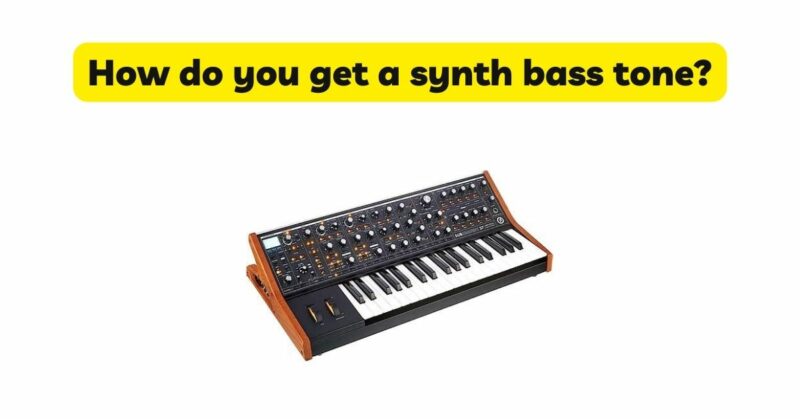
Synth bass tones have become synonymous with modern music production, providing a powerful and driving foundation to many genres. Crafting an exceptional synth bass tone requires a combination of techniques and considerations. In this article, we will delve into the various elements and approaches to achieve a captivating synth bass tone. By understanding these techniques, musicians and producers can create bass sounds that cut through the mix, convey emotion, and leave a lasting impact on the listener.
- Oscillator Selection and Waveforms: Choosing the right oscillator and waveform is crucial in shaping the character of the synth bass tone. Common waveforms used for bass sounds include sine, triangle, sawtooth, and square waves. Sine waves produce pure and fundamental tones, while square and sawtooth waves introduce harmonic richness and aggression. Experimenting with different waveforms and blending them together can yield unique and interesting bass tones.
- Subtractive Synthesis and Filter Techniques: Subtractive synthesis is a popular approach for creating synth bass tones. Start with a rich and harmonically complex sound and use filters to shape the desired tone. Low-pass filters are commonly used to remove high-frequency content and emphasize the bass frequencies. Adjusting the filter cutoff frequency and resonance can further sculpt the bass tone, providing control over brightness, presence, and overall character.
- Envelope Control and Dynamics: Envelopes play a vital role in shaping the dynamic behavior of the synth bass tone. By adjusting the attack, decay, sustain, and release parameters of the envelope, you can control the sharpness of the initial attack, the duration of sustained notes, and the smoothness of the release. Experimenting with envelope settings allows for fine-tuning the transient response and tailoring the bass tone’s articulation to fit the musical context.
- Modulation Techniques: Modulation adds movement and interest to the synth bass tone. By applying modulation to parameters such as filter cutoff, oscillator pitch, or amplitude, you can create evolving and expressive bass sounds. Low-Frequency Oscillators (LFOs) are commonly used for cyclic modulation, while envelopes can be used for more dynamic and transient-based modulation. Experiment with different modulation sources and destinations to add depth and complexity to the bass tone.
- Layering and Doubling: Layering multiple bass sounds can enhance the richness and impact of the synth bass tone. Combining different sounds, such as a deep sub-bass with a mid-range growl or a high-end harmonic layer, creates a more complex and full-bodied bass sound. By carefully balancing the levels and frequencies of the layered sounds, you can achieve a rich and detailed bass tone that cuts through the mix and adds depth to the overall sound.
- Effects and Processing: Effects and processing play a significant role in shaping the final character of the synth bass tone. Techniques like distortion, saturation, and overdrive can add warmth, grit, and aggression to the sound. Modulation effects like chorus, flanger, or phaser can introduce movement and spatialization. Additionally, time-based effects such as reverb and delay can provide depth and ambience to the bass tone. Experimentation with different effects and processing chains can transform a basic bass sound into something truly unique and captivating.
- EQ and Frequency Carving: EQ is an essential tool for sculpting the synth bass tone and ensuring it sits well in the mix. Use EQ to emphasize the desired frequencies and remove any unwanted resonances or muddiness. Boosting the low-end frequencies can enhance the weight and power of the bass tone, while attenuating certain mid-range frequencies can prevent clashes with other instruments or vocals. Careful frequency carving allows the bass tone to cut through the mix and maintain clarity.
- Performance Techniques: The way you play and perform the synth bass also contributes to its overall tone and expressiveness. Experiment with different playing techniques, such as using different velocities or adding subtle pitch bends, slides, or vibrato. Varying the velocity of individual notes can add a sense of dynamics and realism to the bass line. Additionally, using expressive MIDI controllers or assigning modulation sources to parameters like filter cutoff or amplitude can provide real-time control and add nuance to the bass tone during performances.
- Context and Arrangement: Consider the musical context and arrangement when creating a synth bass tone. The bass tone should complement and support the other elements in the mix. Pay attention to the genre, song structure, and intended mood of the music. A synth bass tone for a dance track might require a different approach than a bass tone for a ballad. By understanding the overall musical vision, you can tailor the synth bass tone to fit seamlessly within the composition.
- Iteration and Experimentation: Creating a captivating synth bass tone often requires exploration and experimentation. Don’t be afraid to push boundaries, try unconventional techniques, and think outside the box. Tweak parameters, layer different sounds, and experiment with effects to discover unique combinations that suit your artistic vision. Allow yourself the freedom to iterate and refine your approach until you find the perfect synth bass tone that captures the desired emotion and musicality.
Conclusion: Crafting a captivating synth bass tone requires a combination of oscillator selection, filtering techniques, envelope control, modulation, layering, effects, EQ, performance techniques, and considering the musical context. By understanding these techniques and elements, musicians and producers can create bass tones that drive the music, evoke emotions, and leave a lasting impression on the listener. With patience, experimentation, and a keen ear, the possibilities for creating compelling synth bass tones are limitless, allowing you to elevate your music to new depths of sonic excellence.