
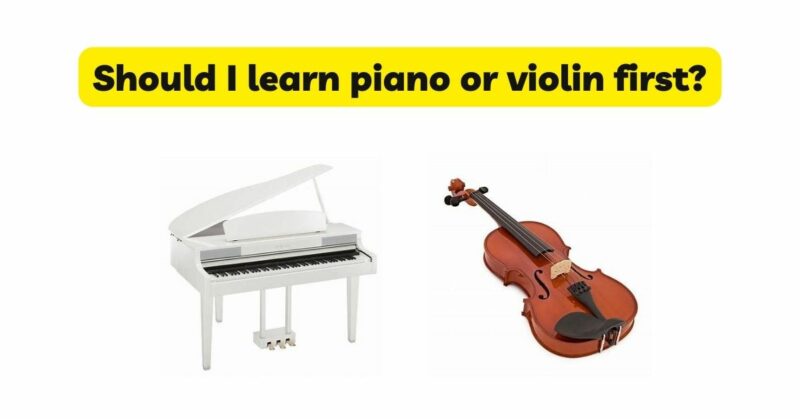
Embarking on a musical journey is an exciting endeavor, but choosing the right instrument can be a daunting task. Among the numerous options available, the piano and the violin stand out as popular choices for aspiring musicians. One common dilemma is whether to learn the piano or the violin as a first instrument. In this article, we will explore various factors such as versatility, technical foundation, musicality, personal preferences, and learning resources to help individuals make an informed decision about whether to learn the piano or the violin first. By considering these factors, we aim to guide beginners in making the best choice for their musical aspirations and goals.
- Versatility and Musical Foundation: The piano is often considered a versatile instrument that provides a solid musical foundation. Learning the piano allows beginners to gain a comprehensive understanding of music theory, harmony, and rhythm. The keyboard layout provides a visual representation of music notation, making it easier to grasp musical concepts such as melody, harmony, and chord progressions. Additionally, the piano’s polyphonic capabilities allow learners to explore complex harmonies and experiment with various musical styles. The versatility and foundational knowledge gained from learning the piano can benefit future musical endeavors.
- Technical Foundation: Learning the piano as a first instrument can provide a strong technical foundation. The linear and visual representation of the keyboard aids in understanding note relationships and finger placements. Beginners can develop finger independence, hand coordination, and finger strength through exercises and repertoire. The tactile experience of striking the keys allows learners to develop a sense of touch and dynamics, enhancing their control and expression. A solid technical foundation gained from learning the piano can later be applied to other instruments if desired.
- Violin’s Expressiveness and Physicality: The violin offers a unique avenue for expressiveness and musicality. Learning the violin as a first instrument allows beginners to develop a deep connection between body and sound production. The violin’s rich and expressive tone, achieved through bowing techniques and nuanced finger placement, enables learners to convey emotions and musical nuances. Additionally, the violin requires physical coordination, proper posture, and muscle control. Holding the instrument correctly, maneuvering the bow, and executing precise finger movements develop physical dexterity and discipline. Learning the violin first can cultivate a strong sense of musical expression and physical coordination.
- Personal Preferences and Musical Aspirations: Personal preferences and musical aspirations should play a significant role in choosing the first instrument. Consider the genres and styles of music that resonate with you the most. If classical music or a specific genre that prominently features the piano captivates your interest, learning the piano first may be a natural choice. However, if you are drawn to the expressive qualities of the violin or have a particular interest in playing in ensembles or orchestras, starting with the violin may align more closely with your musical aspirations. Understanding your personal preferences and musical goals can help guide you in making the right choice.
- Learning Resources and Support: Access to quality learning resources and support is essential for beginners. Consider the availability of qualified teachers, method books, and instructional materials for each instrument. The piano benefits from a vast repertoire, well-established teaching methods, and readily available sheet music. It is relatively easier to find qualified piano teachers and online resources. The violin may require more specialized guidance to ensure correct technique and posture. Assess the availability of violin teachers, instructional materials, and access to suitable repertoire in your area. Availability of resources and support can significantly impact the learning experience and the progression on the chosen instrument.
- Future Musical Endeavors: Consider your long-term musical goals and aspirations when deciding which instrument to learn first. Both the piano and the violin can open doors to various musical opportunities. Learning the piano first may provide a solid foundation in music theory and musicianship, allowing for easier exploration of other instruments. It can also provide the ability to accompany yourself or others when singing or playing in ensembles. On the other hand, starting with the violin can lead to opportunities to play in orchestras, chamber groups, or folk ensembles. Consider your interest in collaborative music-making, solo performances, or specific musical genres when making your decision.
Conclusion: Choosing whether to learn the piano or the violin as a first instrument depends on various factors such as versatility, technical foundation, personal preferences, and future musical aspirations. Learning the piano first offers versatility, a strong foundation in music theory, and a visual representation of musical concepts. It can provide a solid technical foundation applicable to other instruments. On the other hand, starting with the violin allows for the development of expressiveness, a deep connection between body and sound, and physical coordination. Personal preferences, musical aspirations, and access to learning resources should guide your decision-making process. Ultimately, choosing an instrument that resonates with your musical interests, aligns with your goals, and brings you joy will set you on a fulfilling musical journey. Remember that whichever instrument you choose, dedication, consistent practice, and guidance from qualified instructors are key to achieving proficiency and unlocking your musical potential.