
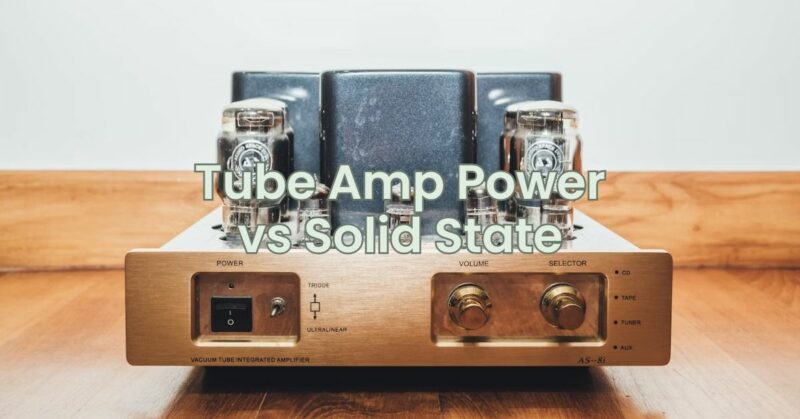
Choosing the right amplifier for your audio system is a crucial decision that can significantly impact your listening experience. Two popular amplifier technologies are tube amps and solid-state amps. Tube amps, also known as valve amps, rely on vacuum tubes to amplify audio signals, while solid-state amps utilize transistors for amplification. In this article, we will compare tube amp power and solid-state power, exploring their characteristics, sound qualities, and considerations to help you make an informed decision when selecting an amplifier for your audio setup.
Tube Amp Power: Tube amps have a distinct sonic signature that has attracted audio enthusiasts for decades. Here are some key points to consider when it comes to tube amp power:
- Sound Characteristics: Tube amps are known for their warm, rich, and harmonically textured sound. They often impart a pleasant distortion and natural compression to the audio, creating a smooth and euphonic listening experience. Tube amps excel in reproducing the midrange frequencies, offering a musical and immersive soundstage.
- Dynamic Range: Tube amps tend to have a more forgiving dynamic range, allowing for softer passages to be reproduced with greater detail and presence. They provide a sense of depth and realism to the music, particularly in live recordings and acoustic performances.
- Power Output: Tube amps typically have lower power output compared to solid-state amps. However, their power is often measured differently, with tube amps often rated in terms of “tube watts” that deliver a perceived loudness equivalent to higher solid-state wattage ratings. Tube amps are favored by many audiophiles for their ability to produce high-quality sound even at lower wattages.
- Harmonic Distortion: Tube amps introduce harmonic distortion, which can add a pleasing warmth and musicality to the sound. This distortion can vary based on the specific tubes used and can contribute to the unique character of tube amp power.
Solid State Power: Solid-state amps have gained popularity for their reliability, efficiency, and accuracy in audio reproduction. Here are some key points to consider when it comes to solid-state power:
- Sound Characteristics: Solid-state amps offer a transparent and accurate sound reproduction. They strive for a flat frequency response and minimal distortion, focusing on clarity, detail, and precision. Solid-state amps are often favored for their ability to faithfully reproduce recordings with a high level of accuracy.
- Power Output: Solid-state amps typically have higher power output compared to tube amps. They are capable of driving speakers with greater efficiency and delivering higher volumes, making them suitable for larger rooms and demanding listening scenarios.
- Stability and Reliability: Solid-state amps are known for their stability and reliability. They are less prone to overheating and require minimal maintenance compared to tube amps. Solid-state amps also offer consistent performance over long durations and are less susceptible to changes in environmental conditions.
- Transient Response: Solid-state amps excel in handling quick and transient musical passages. They offer faster attack and decay times, making them suitable for genres that require precise timing and control, such as electronic music and complex orchestral compositions.
Conclusion: Deciding between tube amp power and solid-state power depends on your personal preferences, listening habits, and the characteristics you value in your audio reproduction. Tube amps offer a warm and harmonically rich sound with a focus on musicality, while solid-state amps provide accuracy, transparency, and higher power output. Consider the type of music you enjoy, your listening environment, and the specific characteristics you seek in your sound reproduction when selecting between these two amplifier technologies. Ultimately, both tube amps and solid-state amps have their own unique qualities and can enhance your audio experience in different ways.