
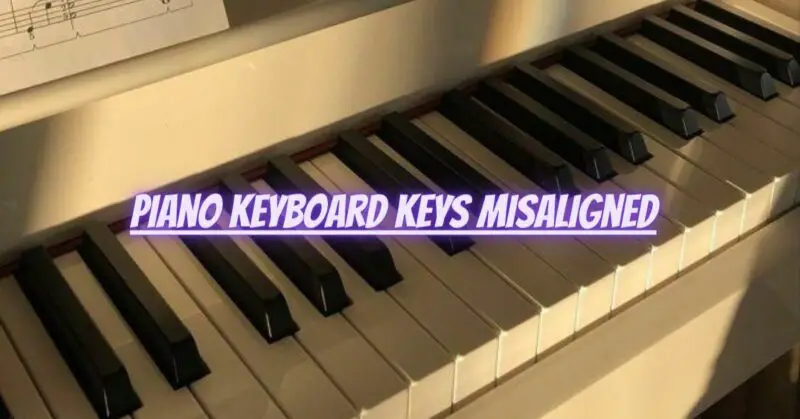
Encountering misaligned keys on your piano keyboard can be frustrating and affect your playing experience. Misaligned keys can result in uneven response and hinder your ability to play with accuracy and precision. In this article, we’ll explore common causes of misaligned keys on a piano keyboard and provide practical solutions to troubleshoot and resolve the issue.
1. Physical Impact or Pressure:
Physical impact or excessive pressure on the keyboard can cause the keys to shift out of alignment.
Solution:
- Carefully examine the keys to identify any visible misalignment.
- Gently press the misaligned keys back into their proper position using even pressure.
- Avoid using excessive force, as it may cause further damage to the keys or internal components.
2. Loose Key Fasteners:
The fasteners that secure the keys to the keyboard’s frame may become loose over time, causing misalignment.
Solution:
- If you are comfortable with basic repairs, open the keyboard and inspect the key fasteners.
- Tighten any loose screws or fasteners to secure the keys in their correct positions.
3. Environmental Factors:
Changes in temperature and humidity levels can cause the materials of the keyboard to expand or contract, leading to misalignment.
Solution:
- Keep your piano keyboard in a stable environment with controlled humidity levels to minimize the impact of temperature and moisture changes.
4. Warped or Bent Keys:
Warped or bent keys can result from exposure to extreme environmental conditions or physical damage.
Solution:
- If you notice any warped or bent keys, avoid attempting to straighten them yourself, as it may cause further damage.
- Seek the assistance of a qualified piano technician to assess and repair the affected keys.
5. Aging or Wear and Tear:
Over time, the components of the keyboard may experience wear and tear, leading to misaligned keys.
Solution:
- Regularly maintain and care for your piano keyboard to prolong its lifespan and prevent premature wear and tear.
- Consult the user manual for recommended maintenance practices and schedules.
6. Manufacturer Support:
If misaligned keys persist despite your efforts, contacting the manufacturer’s support team is recommended.
Solution:
- Reach out to the manufacturer’s customer support for further assistance and potential warranty coverage for the misaligned keys.
7. Seeking Professional Assistance:
For more complex misalignment issues or if you’re unsure about performing repairs yourself, seeking the help of a qualified piano technician is advisable.
Solution:
- A piano technician has the expertise and specialized tools to diagnose and resolve misalignment issues accurately and safely.
Conclusion:
Misaligned keys on a piano keyboard can occur due to various factors, such as physical impact, loose fasteners, environmental changes, or wear and tear. By carefully inspecting the keys, tightening loose fasteners, and maintaining a stable environment, you can often resolve the issue. If the problem persists or involves more complex misalignment, it’s best to seek the assistance of a qualified piano technician. Proper maintenance and care of your piano keyboard will ensure that the keys remain in alignment, allowing you to play with ease and accuracy, and continue to enjoy your musical journey with a smooth and responsive playing experience.