
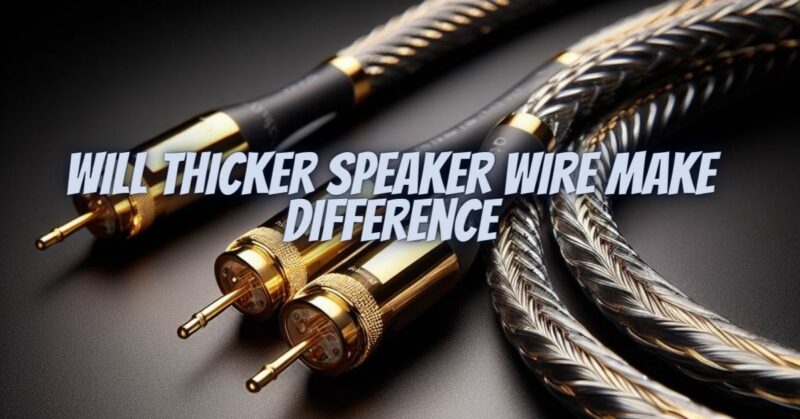
The choice of speaker wire gauge, or thickness, is a topic of discussion among audiophiles and audio enthusiasts. Many wonder if investing in thicker speaker wire will result in a noticeable improvement in audio quality. In this comprehensive article, we will explore the factors involved in selecting speaker wire gauge, the potential impact of thicker wire on sound quality, and the practical considerations for choosing the right speaker wire for your audio system.
Understanding Speaker Wire Gauge
Speaker wire gauge is a measurement of the wire’s thickness or diameter. It is typically expressed in American Wire Gauge (AWG) or simply as a numerical value. The lower the AWG number, the thicker the wire. For example, 12 AWG wire is thicker than 16 AWG wire.
Key Factors to Consider
Before delving into the effect of thicker speaker wire on audio quality, let’s examine some critical factors that influence the choice of wire gauge:
- Resistance: Speaker wire resistance is a critical factor affecting audio quality. Lower resistance means less signal loss as the electrical current travels from the amplifier to the speakers. Thicker wire typically has lower resistance.
- Distance: The length of the speaker wire plays a significant role in determining the appropriate gauge. Longer wire runs can lead to more significant resistance, which can be mitigated by using thicker wire.
- Speaker Impedance: The impedance of your speakers matters. Lower-impedance speakers (e.g., 4 ohms) can benefit from thicker wire to minimize resistance, while higher-impedance speakers (e.g., 8 ohms) are less sensitive to wire gauge.
- Power Handling: Consider the power requirements of your speakers. High-powered systems may benefit from thicker wire to ensure efficient power transfer.
- Amplifier Output: The amplifier’s power output and impedance matching with your speakers are critical. Thicker wire can help ensure that the amplifier delivers sufficient power to the speakers.
Impact of Thicker Speaker Wire on Sound Quality
Now, let’s address the primary question: does thicker speaker wire make a noticeable difference in audio quality?
- Short Distances: For relatively short speaker wire runs (typically under 20 feet or 6 meters) in a typical home audio setup, the difference in audio quality between thicker and thinner wire is often minimal and may not be audible to most listeners. Standard 16 AWG or 14 AWG wire is usually sufficient for such scenarios.
- Long Distances: In situations where speaker wire needs to span longer distances, especially in large rooms or home theater setups, thicker wire (e.g., 12 AWG or 10 AWG) can help reduce resistance over the extended length, potentially preserving signal quality and ensuring better audio performance.
- High-Powered Systems: High-powered audio systems, such as those used in professional settings or for large venues, can benefit from thicker wire to handle the increased power demands and reduce the risk of signal degradation.
- Audiophile Environments: Audiophiles with highly specialized equipment and a keen ear for audio nuances may notice subtle improvements in sound quality with thicker speaker wire. However, these improvements are often challenging to perceive for the average listener.
Practical Considerations
When selecting speaker wire for your audio system, consider the following practical tips:
- Match Gauge to Requirements: Choose a speaker wire gauge that matches the specific needs of your setup, considering distance, speaker impedance, and power requirements.
- Quality Matters: Invest in high-quality speaker wire with good insulation and conductive materials, as this can impact long-term durability and signal quality.
- Speaker Placements: Ensure that your speakers are appropriately placed and that the room acoustics are optimized, as these factors have a more substantial impact on audio quality than speaker wire gauge.
- Budget Considerations: Thicker wire tends to be more expensive. Evaluate your budget and priorities to strike the right balance between wire thickness and other audio system components.
In conclusion, the choice of speaker wire gauge, specifically whether thicker wire will make a noticeable difference in audio quality, depends on various factors, including your setup, speaker impedance, and cable length. While thicker wire can offer advantages in certain situations, for most typical home audio setups with short wire runs, the difference in sound quality between thicker and standard-gauge wire is often subtle or even negligible. It’s essential to make an informed decision based on your specific requirements and budget, keeping in mind that other factors like speaker placement and room acoustics play a more substantial role in overall audio quality.