
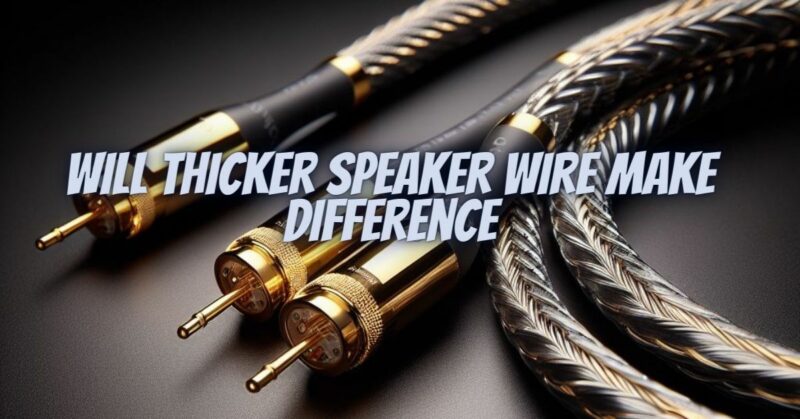
Thicker speaker wire has less resistance than thinner speaker wire, which means that it can carry more current and deliver a cleaner signal to your speakers. This can lead to a number of benefits, including:
- Improved dynamics: Thicker speaker wire can help to improve the dynamics of your system, which means that the music will sound more alive and engaging.
- Deeper bass: Thicker speaker wire can also help to improve the bass response of your system, which means that the music will sound deeper and more impactful.
- Reduced distortion: Thicker speaker wire can also help to reduce distortion, which means that the music will sound cleaner and more accurate.
However, the degree to which thicker speaker wire will make a difference in your system will depend on a number of factors, including:
- The quality of your audio system: If you have a high-end audio system, you may be able to hear a noticeable difference between thicker and thinner speaker wire. However, if you have a mid-range or budget audio system, you may not be able to hear a significant difference.
- The length of the cable: The longer the cable, the more resistance it will have. This means that the benefits of using thicker speaker wire will be more pronounced for longer cable runs.
- Your own ears: Some people are more sensitive to audio quality than others. If you have a good ear for music, you may be able to hear a subtle difference between thicker and thinner speaker wire.
When to Use Thicker Speaker Wire
If you have a high-end audio system and you are running long cable runs, then you should definitely consider using thicker speaker wire. This will help to ensure that you are getting the best possible sound quality from your system.
However, even if you have a mid-range or budget audio system, you may still want to consider using thicker speaker wire if you are running long cable runs. This will help to minimize signal loss and ensure that your speakers are getting the power they need.
How to Choose the Right Speaker Wire Gauge
The gauge of the speaker wire determines how much current it can carry. The thicker the gauge, the more current the cable can carry. The following table shows the recommended speaker wire gauge for different power levels:
| Power Level | Speaker Wire Gauge |
|---|---|
| Up to 50 watts | 16 AWG |
| 50 to 100 watts | 14 AWG |
| 100 to 200 watts | 12 AWG |
| Over 200 watts | 10 AWG |
If you are unsure which gauge of speaker wire to use, it is always best to err on the side of caution and choose a thicker gauge wire.
Thicker speaker wire can make a difference in sound quality, but the degree to which it does will depend on a number of factors, including the quality of your audio system, the length of the cable, and your own ears. If you have a high-end audio system and you are running long cable runs, then you should definitely consider using thicker speaker wire. However, even if you have a mid-range or budget audio system, you may still want to consider using thicker speaker wire if you are running long cable runs.