
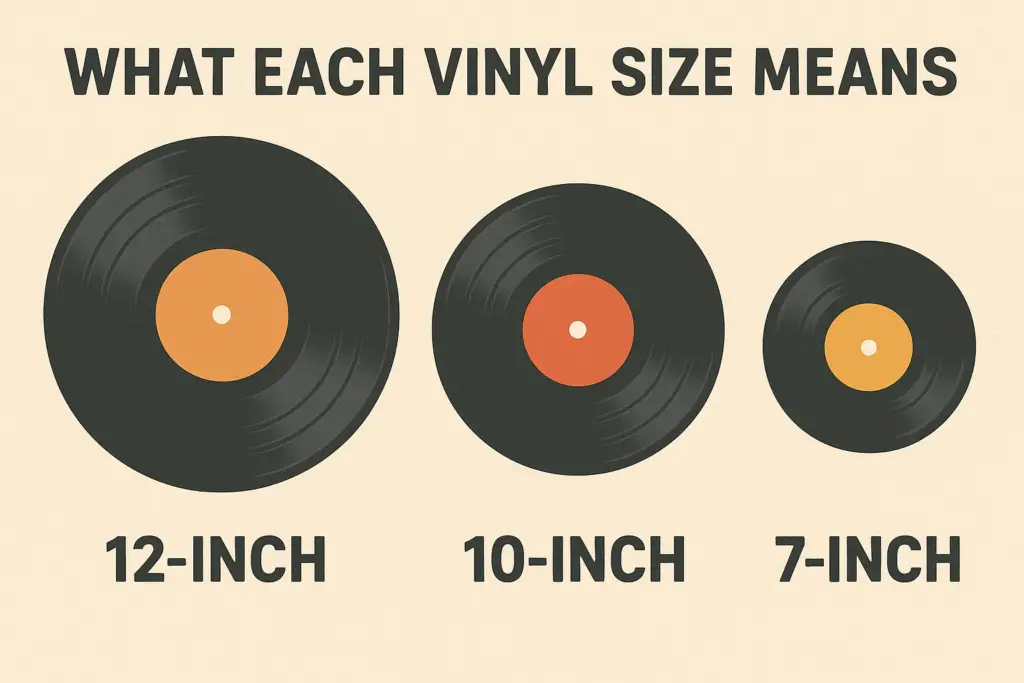
Vinyl records come in several sizes—each with its own purpose, sound characteristics, and typical use cases. Whether you’re new to collecting or trying to understand the differences between 7-inch singles and 12-inch LPs, knowing what each size means will help you choose the right records for your setup.
This guide breaks down every common vinyl size and what makes each one unique.
Why Vinyl Sizes Matter
The size of a record determines:
- How much music it can hold
- Which RPM speed it uses
- Its sound quality
- Its intended purpose (singles, EPs, albums, audiophile releases)
In general, larger records = more room for grooves = better sound quality and longer playtime.
1. 12-Inch Vinyl Records
The Standard Album Format
The 12-inch record is the most common vinyl size used for full albums and high-quality releases.
Typical RPM
- 33⅓ RPM (most common)
- 45 RPM (audiophile editions)
Playtime
- About 18–22 minutes per side at 33⅓ RPM
Best For
- Full-length albums
- High-fidelity reissues
- DJ and club mixes (when cut at 45 RPM)
Why It’s Popular
The wider grooves and larger surface allow better:
- Dynamics
- Bass response
- Clarity
- Reduced inner-groove distortion
This size offers the best balance between sound quality and playtime.
2. 10-Inch Vinyl Records
The “In-Between” Format
The 10-inch record sits between the 7-inch single and the 12-inch LP.
Typical RPM
- 33⅓ RPM
- 45 RPM
Playtime
- 8–14 minutes per side
Best For
- EPs
- Short albums
- Special editions
- Early pre-LP recordings
Why It’s Unique
The 10-inch format has a retro appeal—popular in the 1950s and revived for modern indie releases and limited editions. It offers better fidelity than a 7-inch but shorter runtime than a full 12-inch LP.
3. 7-Inch Vinyl Records
The Classic Single
The 7-inch record is traditionally used for singles and short releases.
Typical RPM
- 45 RPM (most common)
- 33⅓ RPM (some special releases)
Playtime
- 3–7 minutes per side depending on RPM and groove width
Best For
- Single tracks
- B-sides
- EPs with 2–4 songs
- Collectible releases
Why Collectors Love It
7-inches are iconic for:
- Dedicating a full side to one song
- Punchy, dynamic sound at 45 RPM
- Affordable and highly collectible variants
They’re frequently used for Record Store Day exclusives and band promo releases.
What About 5-Inch or 8-Inch Vinyl?
These are rare and typically produced as:
- Promo items
- Toy records
- Novelties
- Flexi-discs (thin, flexible records)
They’re fun for collectors but not part of standard vinyl formats.
Vinyl Size vs. RPM: Why Both Matter
Record size and speed are connected. Here’s the quick overview:
| Size | Common Speeds | Typical Use | Notes |
|---|---|---|---|
| 12-inch | 33⅓ / 45 | Albums, audiophile cuts | Best overall sound quality |
| 10-inch | 33⅓ / 45 | EPs, short albums | Vintage charm, niche use |
| 7-inch | 45 / 33⅓ | Singles | Punchy, collectible |
| 5-inch | 33⅓ / variable | Novelties | Rare, non-standard |
Bigger size + faster speed = more groove detail, which often equals better audio fidelity.
How to Tell What Size Your Record Is
You can identify vinyl sizes by measuring the record’s diameter:
- 12-inch = ~30 cm
- 10-inch = ~25 cm
- 7-inch = ~17.5 cm
Most records also print size and speed information directly on the label.
Which Vinyl Size Should You Buy?
If you want full albums:
→ Choose 12-inch 33⅓ RPM
If you love high-fidelity sound:
→ Look for 12-inch 45 RPM audiophile presses
If you’re collecting singles or rare tracks:
→ 7-inch is the classic choice
If you enjoy vintage releases or limited editions:
→ 10-inch records offer unique charm
Final Thoughts
Vinyl sizes aren’t just a matter of aesthetics—they shape the entire listening experience. Each format has its own strengths, from the punchy dynamics of a 7-inch single to the warm, expansive sound of a 12-inch LP.
Whether you’re starting your collection or expanding it, understanding what each vinyl size means helps you choose records that fit your listening style, turntable setup, and musical taste.