
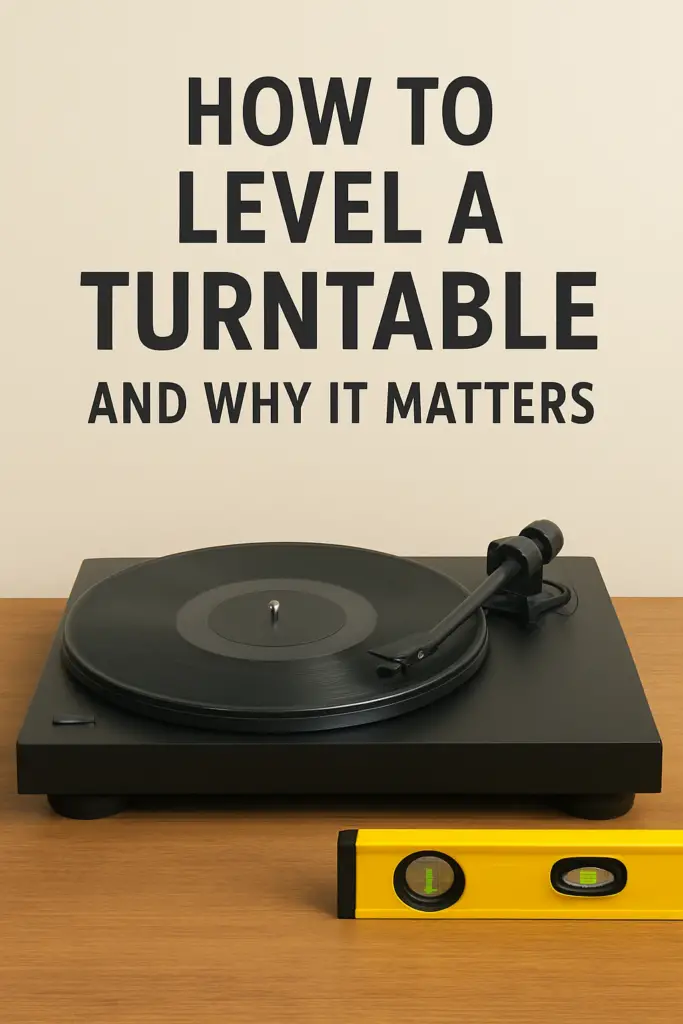
Leveling a turntable may seem like a small detail, but it has a surprisingly large impact on sound quality, tracking accuracy, and record wear. A turntable that isn’t level forces the stylus to track unevenly, leading to distortion, channel imbalance, and unnecessary stress on your cartridge.
In this guide, you’ll learn why leveling matters and how to level your turntable correctly—step by step.
Why Leveling a Turntable Is Important
A turntable is designed to operate on a perfectly horizontal plane. When it’s not level, several problems can occur:
- Uneven stylus pressure on the groove walls
- Channel imbalance (one side sounds louder)
- Increased distortion and mistracking
- Poor tracking on inner grooves
- Premature stylus and record wear
Even a slight tilt can affect performance, especially with modern high-resolution cartridges.
How Leveling Affects Sound Quality
When a turntable is level:
- The stylus sits evenly in the groove
- Tracking force is distributed correctly
- Anti-skate functions as intended
- Stereo imaging remains centered
- Dynamics and detail are preserved
A properly leveled turntable provides a more stable, predictable platform for accurate playback.
What You’ll Need
Before you start, gather the following:
- A small bubble level (circular or straight)
- A stable stand or audio rack
- Adjustable turntable feet (if available)
- Thin shims or isolation pads (if feet aren’t adjustable)
Step-by-Step: How to Level a Turntable
Step 1: Level the Surface First
Place the bubble level on the shelf or stand where the turntable will sit. Adjust the stand or add shims until it’s level.
A level surface is essential before adjusting the turntable itself.
Step 2: Place the Turntable and Check Side-to-Side
- Set the turntable in position.
- Place the level on the platter (not the plinth).
- Check left-to-right level.
Adjust the turntable feet or add shims until the bubble is centered.
Step 3: Check Front-to-Back Level
- Rotate the level 90 degrees.
- Check front-to-back balance.
- Adjust as needed.
Always recheck side-to-side after making changes.
Step 4: Check Multiple Points
For best accuracy:
- Move the level around the platter
- Check near the spindle and outer edge
Consistency matters more than perfection.
What If Your Turntable Has Fixed Feet?
If your turntable doesn’t have adjustable feet:
- Use thin shims, cards, or isolation pads
- Place them under the turntable feet
- Make very small adjustments
Avoid wedging materials under the plinth itself.
Common Leveling Mistakes
- Leveling the plinth instead of the platter
- Ignoring the shelf or stand
- Using large shims instead of fine adjustments
- Checking only one direction
- Forgetting to recheck after moving equipment
Leveling should be revisited anytime the turntable is moved.
How Often Should You Re-Level Your Turntable?
Recheck leveling:
- After moving the turntable
- After changing furniture or flooring
- If sound becomes unbalanced
- Every few months as routine maintenance
Homes naturally shift over time—especially on wooden floors.
Audible Signs Your Turntable Isn’t Level
You may notice:
- One channel sounding louder
- Increased sibilance or distortion
- Poor tracking on loud passages
- Skipping on warped records
If these issues appear suddenly, leveling should be the first thing you check.
Final Thoughts
Leveling a turntable is one of the easiest and most cost-effective improvements you can make to your vinyl setup. It requires no technical skill, minimal tools, and only a few minutes—but the benefits are immediate and audible.
Think of leveling as the foundation of your analog system. When everything is balanced, your records—and your ears—will thank you.