
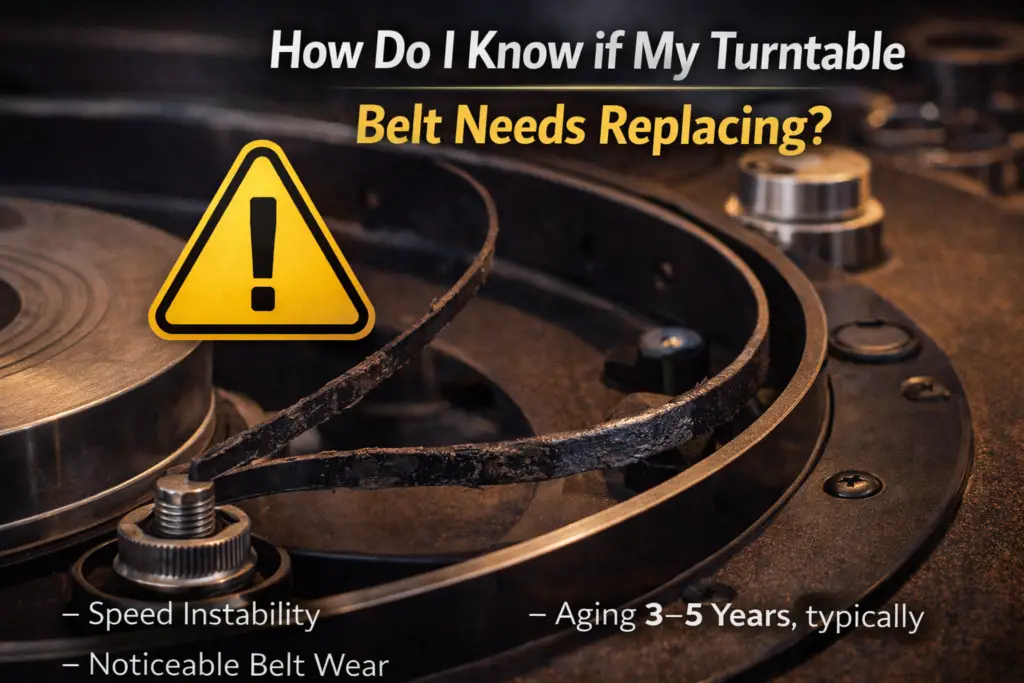
In a belt-drive turntable, the belt is a deceptively simple component with a critical role. It transfers power from the motor to the platter while helping isolate motor vibration from the record. Over time, however, belts inevitably wear. Knowing when your turntable belt needs replacing can restore speed accuracy, reduce noise, and protect your records from mistracking.
Why Turntable Belts Wear Out
Turntable belts are typically made from rubber or elastomer compounds that degrade with age and use. Common causes of deterioration include:
- Stretching from constant tension
- Hardening or loss of elasticity
- Exposure to heat, dust, or oils
- Oxidation and environmental aging
Even lightly used turntables can suffer belt degradation simply due to time.
Audible Signs of a Worn Belt
One of the first clues often comes from listening:
- Music sounds slightly slow or fast
- Pitch wavers on sustained notes
- Timing feels soft or inconsistent
- Bass loses impact or definition
These symptoms can be subtle at first, especially on less pitch-sensitive material.
Physical Signs to Look For
A visual inspection can reveal clear warning signs:
- Belt appears loose or droops when removed
- Shiny or glazed surface
- Cracks, fraying, or uneven thickness
- Sticky residue on fingers or pulley
Any of these indicate that the belt is past its optimal life.
Startup and Speed Behavior
Pay attention to how the turntable behaves mechanically:
- Platter takes longer than usual to reach speed
- Platter slows noticeably when the stylus contacts the record
- Speed changes when switching between 33 and 45 RPM
These issues often point directly to belt slippage or loss of grip.
How Long Should a Belt Last?
While usage varies, general guidelines are:
- 3–5 years for regular use
- 5–7 years for light or occasional use
- Sooner if the turntable is in a warm or dusty environment
High-quality belts may last longer, but no belt lasts forever.
The Importance of the Correct Replacement Belt
Using the wrong belt can cause more harm than good. An incorrect belt may:
- Alter platter speed
- Increase motor load
- Introduce wow and flutter
- Reduce isolation from motor vibration
Always use a belt specified by the manufacturer or a trusted specialist.
Cleaning Before Replacing
Before installing a new belt:
- Clean the motor pulley with isopropyl alcohol
- Clean the platter’s belt path
- Ensure hands are oil-free
This ensures proper grip and maximizes belt life.
The Sonic Benefits of a Fresh Belt
Replacing a worn belt often results in:
- More stable pitch
- Improved rhythmic precision
- Tighter bass
- Lower perceived noise floor
Many listeners are surprised by how significant the improvement can be.
The Bottom Line
If your turntable sounds unstable, struggles to reach speed, or shows visible belt wear, it’s likely time for a replacement. Belts are inexpensive, easy to change, and one of the most cost-effective maintenance upgrades available.
When in doubt, replacing an aging belt is a small investment that can deliver a big return in sound quality and reliability.