
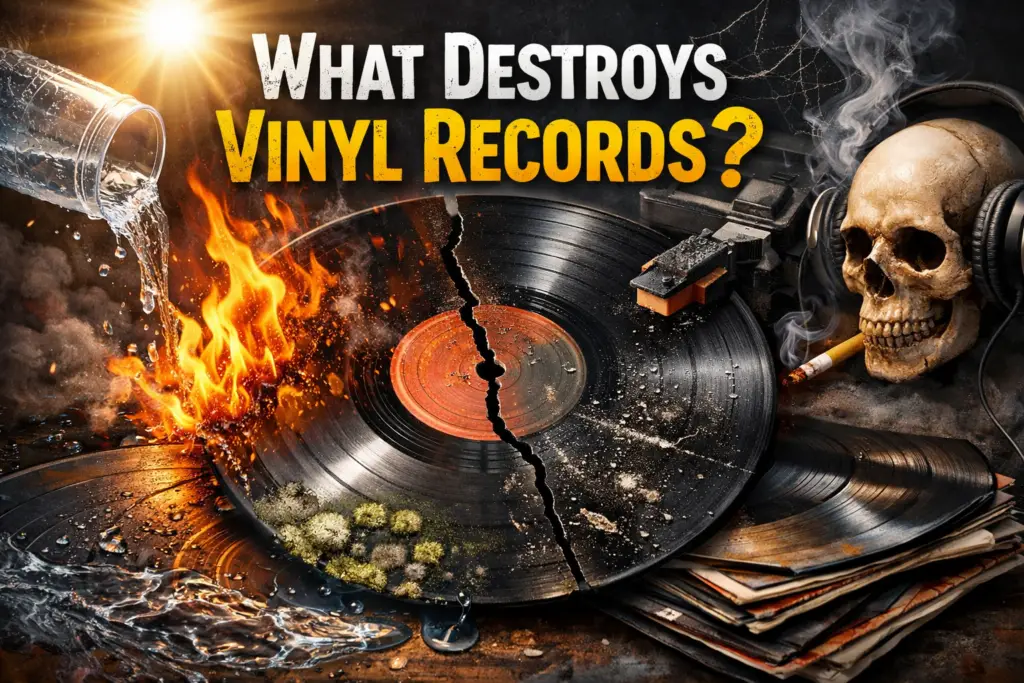
Vinyl records can last for decades—sometimes a lifetime—when properly cared for. Yet many collections suffer premature wear, noise, or irreversible damage. Understanding what destroys vinyl records is the first step toward preserving both sound quality and value.
Improper Stylus and Turntable Setup
One of the fastest ways to damage records is poor playback setup:
- Excessive tracking force
- Worn or damaged stylus tips
- Incorrect cartridge alignment
- Mismatched cartridge compliance and tonearm mass
A misaligned or worn stylus can permanently deform groove walls in just a few plays.
Dirt, Dust, and Abrasive Contamination
Dust may look harmless, but under a stylus it becomes abrasive:
- Embedded particles grind away groove detail
- Debris increases surface noise
- Dirt accelerates stylus wear
Playing dirty records repeatedly causes cumulative damage that cleaning later cannot fully undo.
Heat and Sunlight
Vinyl is sensitive to heat:
- Temperatures above ~60°C (140°F) can warp records
- Direct sunlight accelerates warping and chemical breakdown
- Uneven heat causes permanent deformation
Once warped, records rarely return to their original shape.
Improper Storage
How records are stored is as important as how they’re played:
- Stacking records horizontally causes warping
- Tight shelving can cause edge damage
- Leaning records at an angle can deform them over time
Records should always be stored vertically, upright, and evenly supported.
Poor Inner Sleeves
Low-quality paper sleeves can:
- Scratch record surfaces
- Shed fibers into grooves
- Trap moisture and contaminants
Archival-quality, anti-static inner sleeves are one of the simplest and most effective upgrades for record preservation.
Excessive Cleaning—or the Wrong Kind
Cleaning helps—but only when done correctly:
- Harsh chemicals can leach plasticizers from vinyl
- Alcohol-heavy solutions can dry the record surface
- Aggressive scrubbing damages groove edges
Improper cleaning can be as harmful as no cleaning at all.
Environmental Factors
Long-term exposure to poor environments accelerates record degradation:
- High humidity encourages mold growth
- Extremely dry air increases static buildup
- Smoke residue and airborne pollutants cling to vinyl surfaces
Stable temperature and humidity are essential for long-term storage.
Mishandling and Physical Damage
Many records are destroyed simply through careless handling:
- Touching grooves with bare fingers
- Dropping or sliding records on hard surfaces
- Improper cueing that drags the stylus across the record
Always handle records by the edges and label.
The Silent Destroyer: Time and Neglect
Even without dramatic abuse, neglect slowly takes its toll:
- Uncleaned stylus transfers debris
- Old inner sleeves break down
- Dust accumulates unnoticed
Regular, gentle maintenance is key to longevity.
The Bottom Line
Vinyl records are remarkably durable, but they are not indestructible. Most record damage comes not from age, but from poor playback setup, environmental exposure, and careless handling.
With proper care, clean playback equipment, and thoughtful storage, vinyl records can deliver outstanding sound for generations.