
When it comes to purchasing a keyboard, understanding the average cost can help you budget and make an informed decision. Keyboards come in various types, models, and price ranges, making it essential to explore the factors that influence their costs. In this article, we will delve into the average cost of keyboards, considering different types and their associated features. By gaining insights into the price ranges and factors that contribute to keyboard pricing, you can determine a reasonable budget and find a keyboard that suits your needs.
- Types of Keyboards: Keyboards can be broadly categorized into three types: beginner/keyboards controllers, portable keyboards, and digital pianos. Each type has its own price range and features:
a) Beginner/Keyboard Controllers: Beginner/keyboards controllers are entry-level keyboards that often come with 61 or 76 keys. They serve as learning tools and MIDI controllers, designed for beginners or those who prioritize portability. The average cost of a beginner keyboard or keyboard controller can range from $100 to $300, depending on the brand, features, and included accessories.
b) Portable Keyboards: Portable keyboards offer more features, sounds, and functionality than beginner keyboards. They typically come with a range of 61 to 76 keys and include built-in speakers, various instrument sounds, rhythms, and learning functions. The average cost of a portable keyboard generally falls between $200 and $500, depending on the brand, quality, and features.
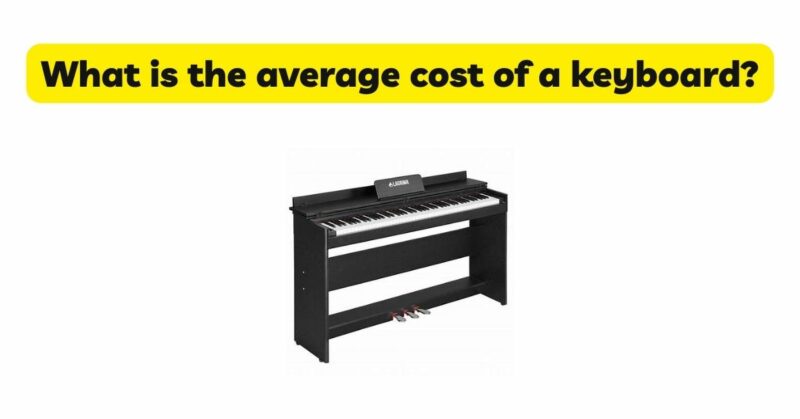
c) Digital Pianos: Digital pianos are designed to replicate the sound and feel of an acoustic piano. They usually come with a full 88-key range and offer weighted or graded hammer action for a realistic playing experience. Digital pianos may also include features such as touch sensitivity, multiple instrument sounds, recording capabilities, and connectivity options. The average cost of a digital piano can range from $500 to $2,000 or more, depending on the brand, quality, and additional features.
- Brand and Quality: The brand and quality of a keyboard can significantly impact its cost. Established and reputable brands often offer higher-quality keyboards with better construction, sound, and durability. These keyboards usually come with a higher price tag due to the investment in research, development, and craftsmanship. Lesser-known or budget-friendly brands may offer keyboards at a lower cost, but the quality and longevity of these instruments may vary.
- Features and Technology: The features and technology incorporated into a keyboard play a crucial role in its cost. Keyboards with more advanced features, such as weighted keys, touch sensitivity, built-in speakers, multiple instrument sounds, rhythm accompaniments, recording capabilities, and connectivity options, tend to be more expensive. These features enhance the playing experience, versatility, and creative possibilities of the keyboard.
- Key Action and Sensitivity: The type of key action and sensitivity is another factor that affects the cost of a keyboard. Higher-end keyboards often feature more advanced key action technology, such as hammer action or graded hammer action, which closely resembles the feel of an acoustic piano. The inclusion of realistic key action and sensitivity can increase the price of the keyboard.
- Built-in Speakers and Amplification: Keyboards that come with built-in speakers and amplification tend to be pricier than those without this feature. Built-in speakers allow for immediate sound output, eliminating the need for external amplification. However, keyboards without built-in speakers can still be connected to external amplifiers or headphones for sound output.
- Connectivity Options: Keyboards equipped with advanced connectivity options, such as USB ports, MIDI connections, audio inputs/outputs, and Bluetooth capabilities, tend to have a higher price point. These connectivity options allow for seamless integration with computers, external devices, recording software, and other musical equipment.
- Accessories and Extras: Consider the additional accessories and extras that may be included or required for the keyboard. Accessories such as stands, benches, sustain pedals, headphones, carrying cases, and learning materials may impact the overall cost. These items can be purchased separately or included as part of a bundle package.
- New or Used: Deciding between purchasing a new or used keyboard can significantly affect its cost. New keyboards often come with warranties, guarantees, and the assurance of quality, but they are generally more expensive. Used keyboards, on the other hand, can offer significant cost savings, but buyers should carefully evaluate the condition, functionality, and age of the instrument before making a purchase.
Conclusion: The average cost of a keyboard depends on several factors, including the type of keyboard (beginner/keyboard controllers, portable keyboards, or digital pianos), brand and quality, features and technology, key action and sensitivity, built-in speakers and amplification, connectivity options, included accessories and extras, and the decision to buy new or used. Understanding these factors will help you set a reasonable budget and find a keyboard that suits your needs and preferences. Remember to consider your skill level, long-term goals, and the quality of sound and features required for your musical journey. By striking a balance between affordability and quality, you can invest in a keyboard that inspires and supports your growth as a musician.