
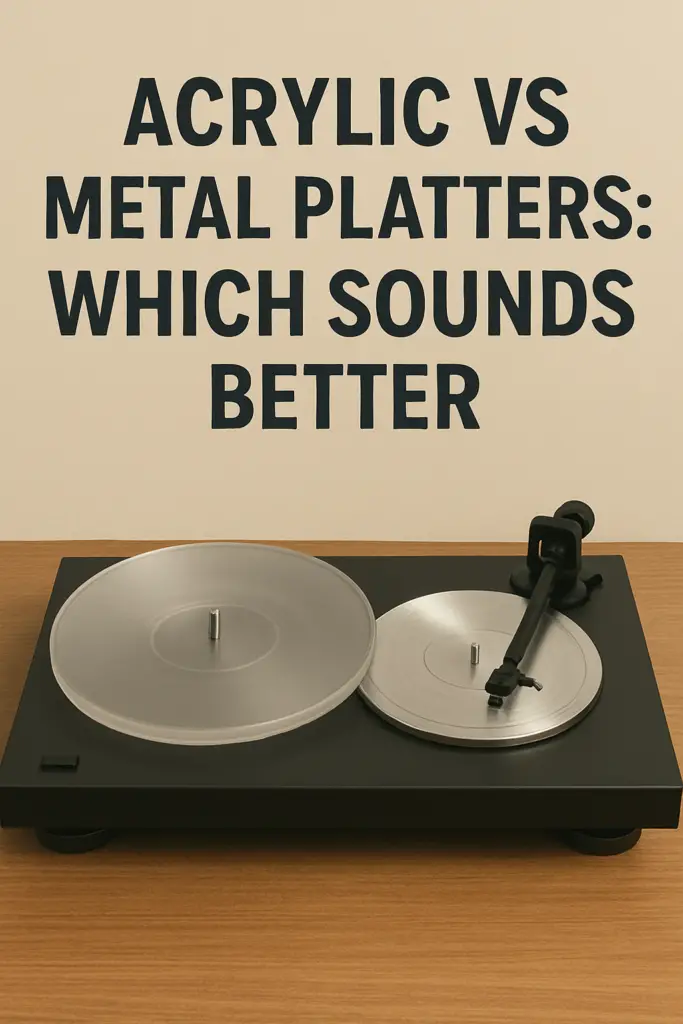
The platter is one of the most influential parts of a turntable, yet it’s often overlooked when discussing sound quality. Among the most common materials, acrylic and metal platters each have distinct sonic characteristics—and neither is universally “better.”
So which one sounds better? The real answer depends on design, system matching, and personal preference. Let’s break it down clearly.
Why Platter Material Matters
The platter supports the record and directly affects:
- Resonance control
- Speed stability
- Vibration transmission
- How energy from the stylus is absorbed or reflected
Because the stylus reads microscopic groove modulations, even small changes in platter behavior can influence sound.
Acrylic Platters: Characteristics & Sound
How Acrylic Works
Acrylic has a resonance behavior similar to vinyl, allowing energy from the record to be absorbed rather than reflected back into the stylus.
Sonic Traits
Listeners often describe acrylic platters as:
- Clean and neutral
- Smooth in the midrange
- Open and detailed
- Slightly leaner in bass
Pros
- Often no mat required
- Reduced static buildup
- Good resonance matching with vinyl
- Clean, modern sound signature
Cons
- Can sound lightweight in bass on some systems
- Less effective at damping external vibration
- Usually lighter than metal alternatives
Metal Platters: Characteristics & Sound
How Metal Works
Metal platters rely on mass and damping to control resonance. They often require a mat to manage vibration.
Sonic Traits
Metal platters typically sound:
- Solid and authoritative
- Strong in bass
- Dynamic and impactful
- Slightly warmer or darker (depending on damping)
Pros
- Excellent speed stability due to mass
- Strong bass response
- Effective vibration resistance when properly damped
- Long-term durability
Cons
- Requires a well-chosen mat
- Potential for ringing if poorly damped
- Can increase motor and bearing load
The Role of the Platter Mat
With metal platters, the mat is critical:
- Rubber mats reduce ringing
- Cork balances warmth and clarity
- Felt emphasizes openness but offers less damping
Acrylic platters often work best with no mat, as adding one can negate their resonance advantages.
System Matching Matters More Than Material
The “better” platter depends on:
- Tonearm and cartridge pairing
- Turntable motor strength
- Bearing quality
- Isolation and support surface
A well-designed metal platter can outperform a poorly implemented acrylic one—and vice versa.
Which Sounds Better for You?
Choose Acrylic If You Prefer:
- Clarity and neutrality
- Low maintenance setup
- Minimal accessories
- A clean, modern sound
Choose Metal If You Prefer:
- Strong bass and dynamics
- Maximum speed stability
- A weighty, grounded presentation
- Fine-tuning with mats
Common Myths About Platters
- “Heavier is always better” – Not necessarily
- “Acrylic eliminates all resonance” – It reduces, not eliminates
- “Metal always needs damping” – True, but well-designed platters include it
Design matters more than material alone.
Final Thoughts
Acrylic vs metal platters isn’t about right or wrong—it’s about synergy. Each material offers a different approach to resonance control and energy management, shaping the final sound in subtle but meaningful ways.
Understanding how platter material interacts with the rest of your system will help you choose the option that truly sounds better—to your ears.