
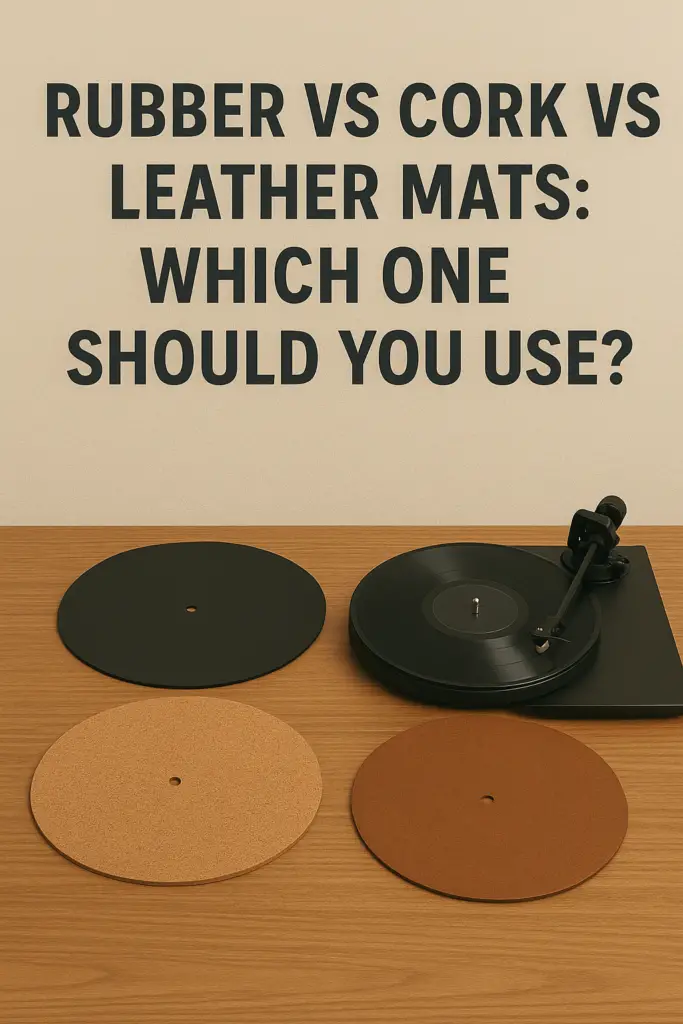
A turntable mat may look like a simple accessory, but it plays a surprisingly important role in vinyl playback. The mat affects how vibrations travel between the record and the platter, influencing clarity, bass response, and even static buildup.
Among the most popular options—rubber, cork, and leather mats—each offers a distinct sonic character and set of trade-offs. So which one should you use? Let’s break it down.
Why the Turntable Mat Matters
The turntable mat sits between the record and the platter, helping to:
- Control resonance and vibration
- Protect records from platter contact
- Reduce static electricity
- Fine-tune tonal balance
The right mat complements your platter material and overall system voicing.
Rubber Mats: Control & Stability
Characteristics
Rubber mats are dense, flexible, and excellent at absorbing vibration.
Sound Signature
Typically described as:
- Warm and controlled
- Strong, tight bass
- Slightly smoother highs
Pros
- Excellent damping
- Reduces platter ringing
- Durable and low maintenance
- Often included with metal platters
Cons
- Can sound slightly dull in some systems
- May attract dust and static
- Less “open” soundstage
Best For
- Metal or glass platters
- Systems that sound bright or thin
- Listeners who value stability and bass weight
Cork Mats: Balance & Openness
Characteristics
Cork is lightweight, porous, and naturally anti-static.
Sound Signature
Often described as:
- Open and lively
- Neutral midrange
- Good detail without harshness
Pros
- Reduces static
- Affordable and lightweight
- Balanced tonal character
- Works well with many platter types
Cons
- Less effective damping than rubber
- Can wear over time
- Bass may feel lighter
Best For
- Entry-level to mid-range turntables
- Systems needing clarity and air
- Listeners seeking subtle improvement without coloration
Leather Mats: Smoothness & Refinement
Characteristics
Leather mats are soft, well-damped, and visually elegant.
Sound Signature
Commonly described as:
- Smooth and refined
- Slightly warm
- Reduced surface noise
Pros
- Good vibration absorption
- Low static
- Protects records well
- Premium look and feel
Cons
- More expensive
- Can slightly soften transients
- Not ideal for already warm systems
Best For
- Bright or analytical systems
- Listeners who want a relaxed presentation
- Acrylic or metal platters needing gentle damping
How Platter Material Affects Mat Choice
- Metal platters benefit most from rubber or leather mats
- Acrylic platters often work best with no mat or thin cork
- Glass platters need damping—rubber or leather preferred
Matching mat to platter is more important than choosing the “best” mat overall.
Quick Comparison
| Mat Type | Sound Character | Static Control | Damping | Best Use Case |
|---|---|---|---|---|
| Rubber | Warm, controlled | Moderate | High | Metal platters, bass control |
| Cork | Open, balanced | High | Medium | General-purpose upgrade |
| Leather | Smooth, refined | High | Medium–High | Bright systems, refinement |
Common Mat Myths
- “Thicker mats always sound better” – Not necessarily
- “Mats fix warped records” – They don’t
- “One mat works for all systems” – System matching is key
Small changes can still make audible differences.
Which One Should You Choose?
Choose rubber if you want control and bass authority.
Choose cork if you want balance and openness.
Choose leather if you want smoothness and refinement.
None is universally best—the right choice depends on your turntable, cartridge, and listening preferences.
Final Thoughts
Turntable mats are fine-tuning tools, not miracle upgrades. While differences are often subtle, the right mat can enhance system synergy, reduce unwanted resonance, and make vinyl playback more enjoyable.
Experimenting with mats is relatively affordable—and sometimes that final touch is all your setup needs.