
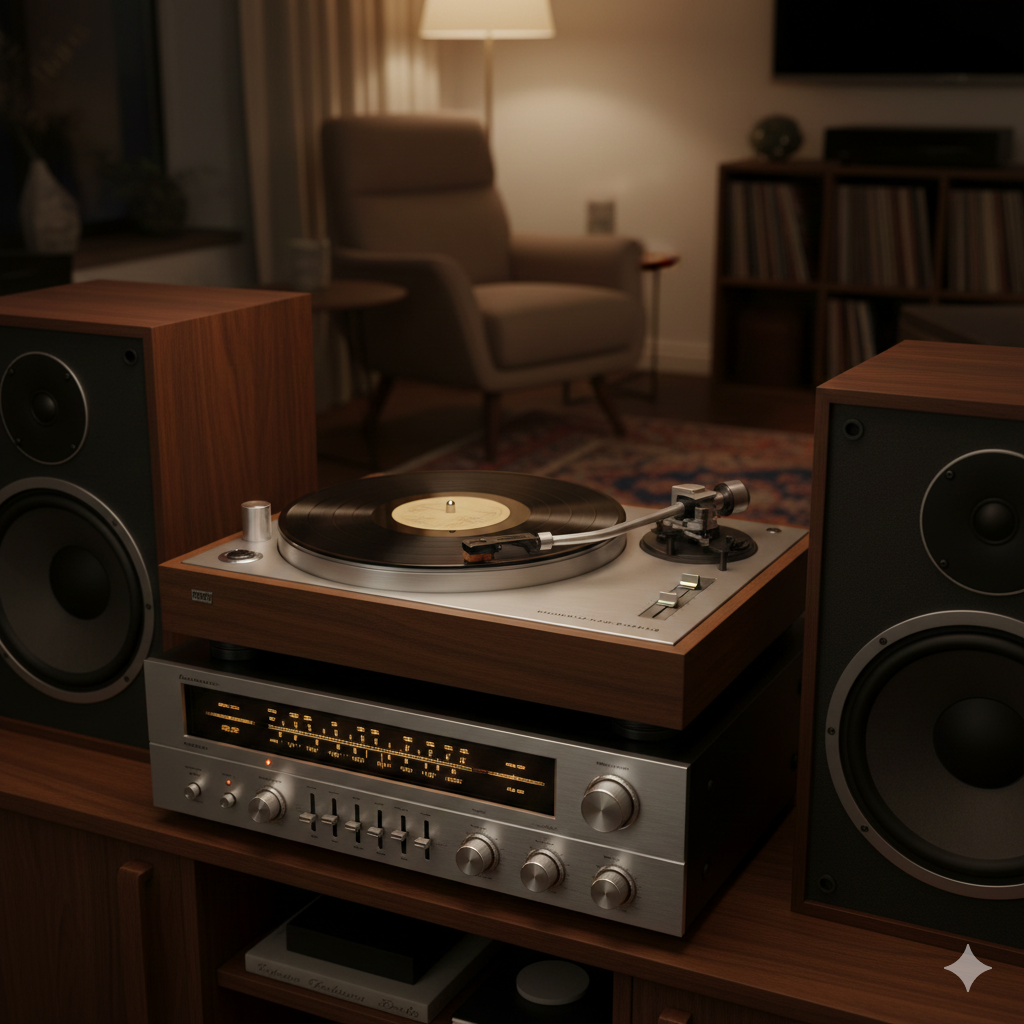
When done correctly, lubrication reduces wear, lowers noise, and ensures stable playback. When done incorrectly, it can cause contamination, speed issues, and long-term damage.
This guide explains what to lubricate, what not to touch, and how to do it safely.
Why Turntable Lubrication Matters
Correct lubrication helps:
- Reduce friction in the platter bearing
- Minimize mechanical noise and rumble
- Maintain consistent speed
- Extend the life of bearings and motors
Lubrication is maintenance—not a sound “upgrade”—but it plays a vital role in long-term performance.
Parts of a Turntable That May Need Lubrication
1. Main Platter Bearing
This is the most important lubrication point.
- Found at the spindle or bearing well
- Supports the platter’s weight
- Directly affects rotational smoothness
Most turntables require only this bearing to be lubricated.
2. Motor (Model-Dependent)
- Many modern motors are sealed and require no oil
- Some vintage motors need periodic lubrication
⚠️ Always consult the service manual before oiling a motor.
Parts You Should NOT Lubricate
Never apply oil or grease to:
- Drive belts
- Record surfaces
- Tonearm bearings
- Electrical contacts
- Platter mat
Lubricating these parts can cause slippage, tracking issues, or electrical problems.
What Type of Oil Should You Use?
Use only:
- Manufacturer-recommended oil
- Synthetic turntable bearing oil
- Light machine oil designed for precision bearings
Avoid:
- WD-40 or penetrating oils
- Automotive oil
- Thick grease (unless explicitly specified)
A few drops are usually enough.
Step-by-Step: How to Lubricate a Turntable
Always check your specific turntable manual before starting.
Step 1: Power Off and Unplug
Ensure the turntable is completely powered down.
Step 2: Remove the Platter
Lift off the platter carefully, following your model’s instructions.
Step 3: Clean the Bearing
- Wipe old oil from the spindle
- Clean the bearing well if accessible
- Use lint-free cloth and isopropyl alcohol
Allow everything to fully dry.
Step 4: Apply Fresh Oil
- Add 2–5 drops of proper oil to the bearing well or spindle
- Do not overfill
Less is better.
Step 5: Reinstall the Platter
Lower the platter slowly and allow it to settle naturally.
Step 6: Let It Rest
Wait several minutes before playing a record to allow oil to distribute evenly.
How Often Should You Lubricate?
- Modern turntables: every 1–2 years
- Vintage or heavily used models: every 6–12 months
- Only when recommended for motors
Over-lubrication can be just as harmful as neglect.
Signs Your Turntable Needs Lubrication
- Increased mechanical noise
- Slower start-up time
- Inconsistent speed
- Dry or dirty spindle
If you notice these, it may be time to re-oil.
Common Lubrication Mistakes
❌ Using WD-40
❌ Over-oiling the bearing
❌ Lubricating belts or tonearms
❌ Skipping cleaning before oiling
Each of these can cause long-term issues.
Final Takeaway
Lubricating a turntable is simple—but precision matters.
Done correctly, it:
- Preserves mechanical health
- Keeps playback quiet and stable
- Prevents expensive repairs
When in doubt, follow the manufacturer’s guidance or consult a technician. A well-lubricated turntable is a happy turntable 🎶