Andrie H

Are Mono Cartridges Better Than Stereo Cartridges When Playing Mono Records?

Are Mono Cartridges Better Than Stereo Cartridges When Playing Mono Records?

For vinyl enthusiasts who collect classic jazz, early rock, blues, or orchestral recordings, mono records are more than nostalgia—they are often the definitive versions of the music. This raises a long-standing audiophile question: do mono cartridges actually sound better than stereo cartridges when playing mono records? The short answer is yes, often they do—but with

Are Mono Cartridges Better Than Stereo Cartridges When Playing Mono Records? Read More »

What Audible Improvements Come from Fine-Tuning VTA and SRA?

What Audible Improvements Come from Fine-Tuning VTA and SRA?

Vertical Tracking Angle (VTA) and Stylus Rake Angle (SRA) are among the most debated—and most misunderstood—adjustments in vinyl playback. Some dismiss them as audiophile obsession; others consider them essential to extracting the last ounce of performance from a cartridge. In truth, when executed correctly, fine-tuning VTA and SRA can deliver clear and repeatable audible improvements—especially

What Audible Improvements Come from Fine-Tuning VTA and SRA? Read More »

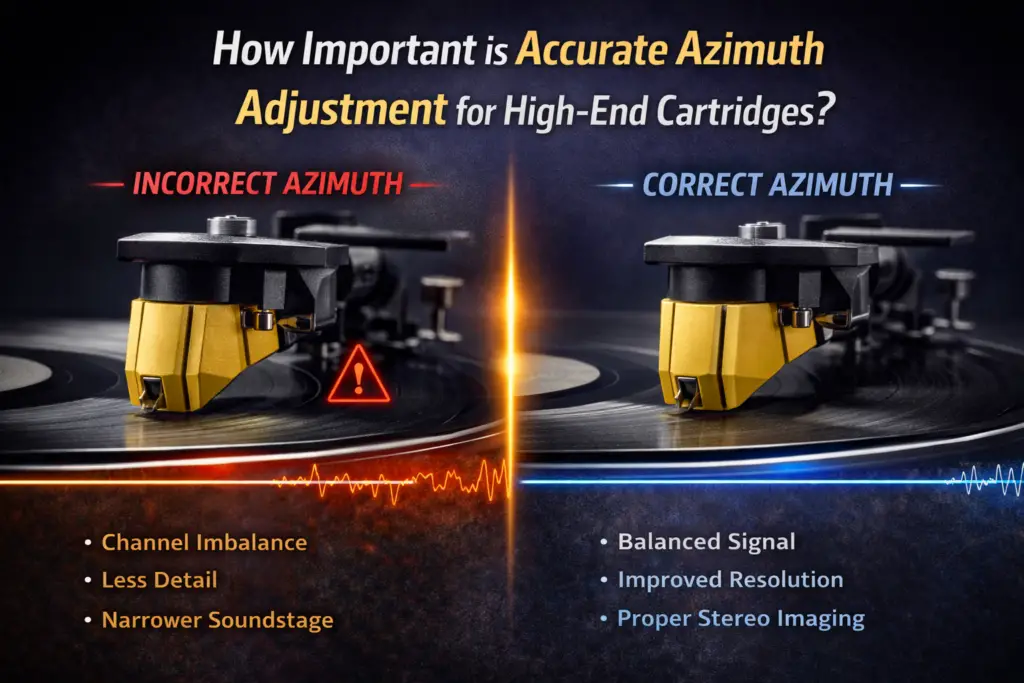
How Important Is Accurate Azimuth Adjustment for High-End Cartridges?

How Important Is Accurate Azimuth Adjustment for High-End Cartridges?

In high-end analog playback, small setup details often make the difference between good sound and truly exceptional performance. Among these details, azimuth adjustment—the side-to-side rotational alignment of the cartridge stylus—can be one of the most overlooked, yet sonically significant, parameters. For advanced cartridges with extreme resolution, azimuth accuracy is not optional. It is fundamental. What

How Important Is Accurate Azimuth Adjustment for High-End Cartridges? Read More »

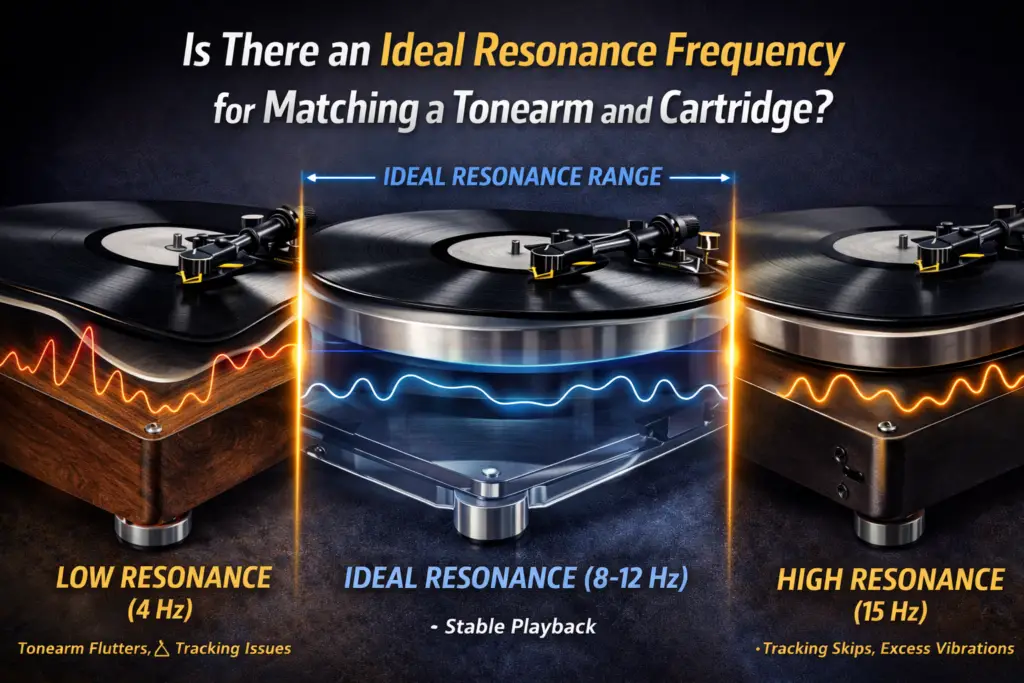
Is There an Ideal Resonance Frequency for Matching a Tonearm and Cartridge?

Is There an Ideal Resonance Frequency for Matching a Tonearm and Cartridge?

Matching a tonearm and cartridge is one of the most critical—and misunderstood—steps in building a high-performance analog playback system. At the center of this process lies a single, often-quoted concept: arm–cartridge resonance frequency. Get it right, and your turntable tracks cleanly, sounds balanced, and stays free of distortion. Get it wrong, and even the finest

Is There an Ideal Resonance Frequency for Matching a Tonearm and Cartridge? Read More »

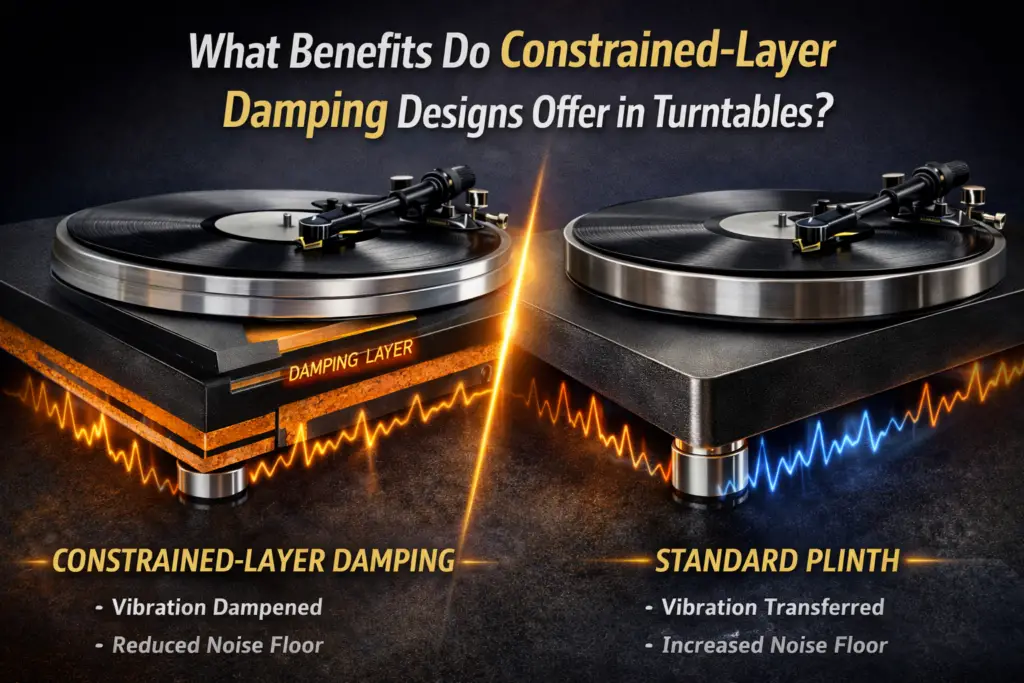
What Benefits Do Constrained-Layer Damping Designs Offer in Turntables?

What Benefits Do Constrained-Layer Damping Designs Offer in Turntables?

In the pursuit of cleaner, more stable analog playback, modern turntable designers increasingly turn to constrained-layer damping (CLD). Often hidden beneath elegant plinths and polished platters, CLD is one of the most effective—and least visible—ways to control resonance and vibration. But what exactly does constrained-layer damping do, and why does it matter so much for

What Benefits Do Constrained-Layer Damping Designs Offer in Turntables? Read More »

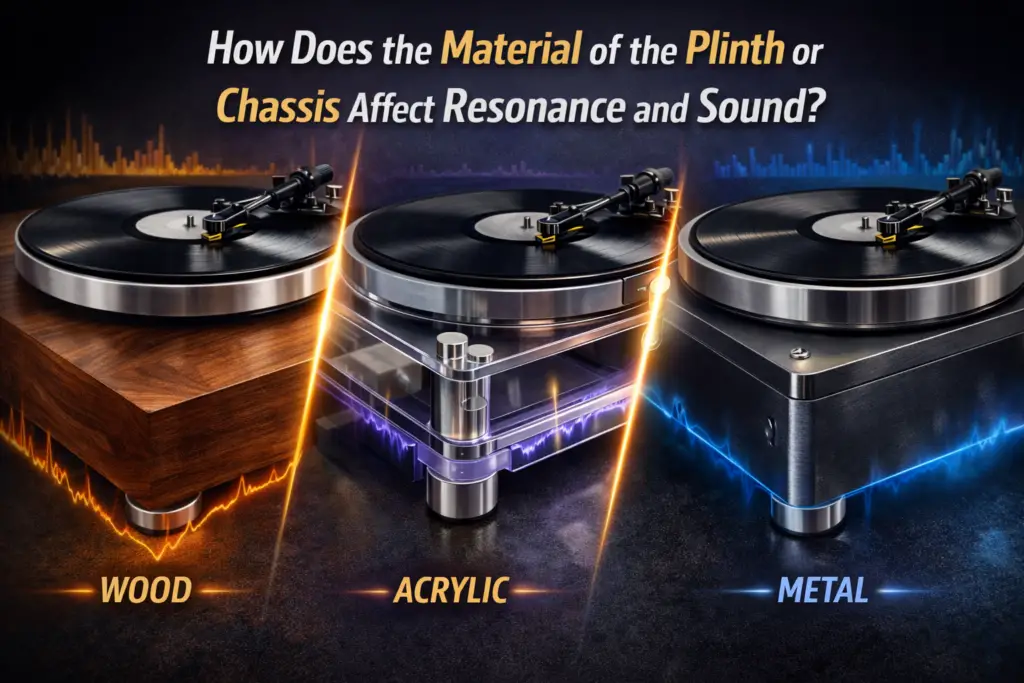
How Does the Material of the Plinth or Chassis Affect Resonance and Sound?

How Does the Material of the Plinth or Chassis Affect Resonance and Sound?

In a turntable, the plinth or chassis is more than a structural base—it is the foundation that determines how vibration is managed throughout the entire system. From dense hardwoods to layered composites and machined metal, plinth materials play a decisive role in shaping resonance behavior and, ultimately, sound quality. Understanding how different materials behave helps

How Does the Material of the Plinth or Chassis Affect Resonance and Sound? Read More »

Are External (Outboard) Motor Units Better Than Motors Built into the Turntable?

Are External (Outboard) Motor Units Better Than Motors Built into the Turntable?

In high-end turntable design, moving the motor outside the plinth is often seen as a mark of seriousness—sometimes even superiority. Outboard motor units appear in many premium analog systems, promising lower noise, better isolation, and purer sound. But does separating the motor from the turntable actually lead to audible improvements, or is it simply another

Are External (Outboard) Motor Units Better Than Motors Built into the Turntable? Read More »

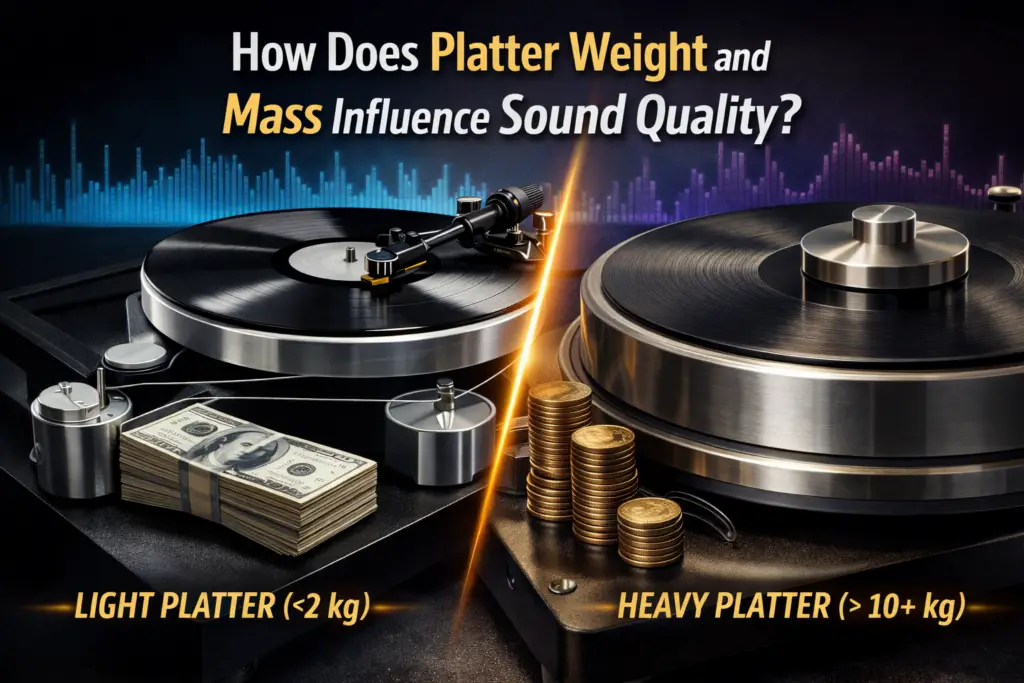
How Does Platter Weight and Mass Influence Sound Quality?

How Does Platter Weight and Mass Influence Sound Quality?

In turntable design, few components are as visually impressive—or as misunderstood—as the platter. From lightweight acrylic discs to massive metal slabs weighing tens of kilograms, platter weight is often associated with sound quality. But does a heavier platter automatically mean better sound? The answer lies in how platter mass interacts with physics, motor design, and

How Does Platter Weight and Mass Influence Sound Quality? Read More »

Do Turntables with Multiple Motors or Rim-Drive Systems Actually Sound Better?

Do Turntables with Multiple Motors or Rim-Drive Systems Actually Sound Better?

In the world of high-end analog playback, few topics spark as much debate as turntable drive systems. Beyond the familiar belt-drive and direct-drive designs, some manufacturers push further with multiple-motor layouts or rim-drive systems, often at eye-watering prices. The promise is seductive: greater torque, superior speed stability, and ultimately better sound. But do these designs

Do Turntables with Multiple Motors or Rim-Drive Systems Actually Sound Better? Read More »

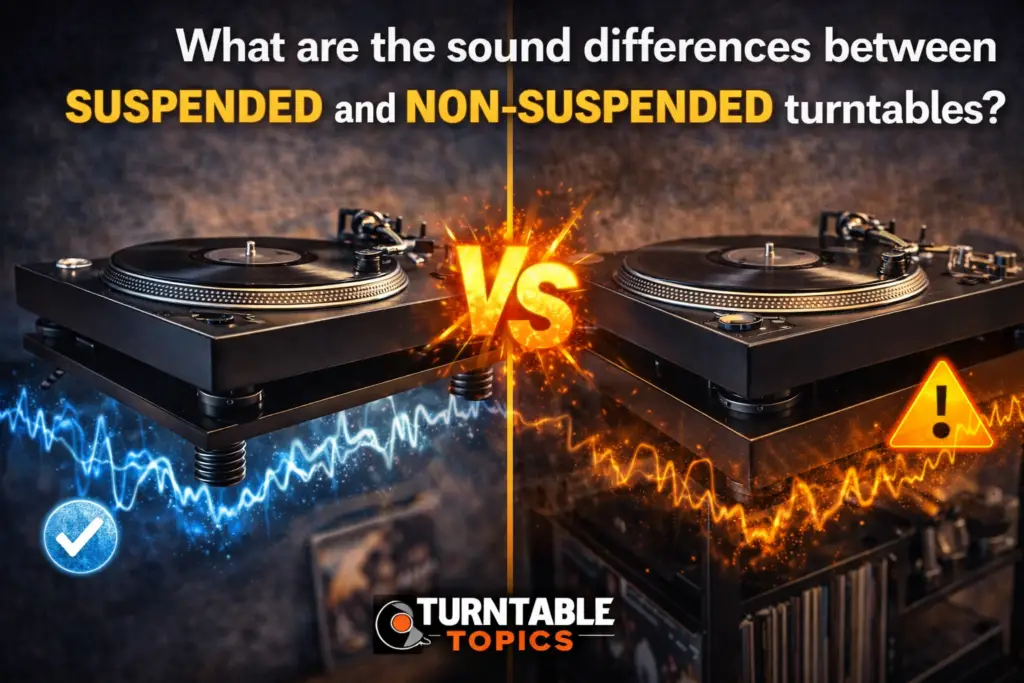
What Are the Sound Differences Between Suspended and Non-Suspended Turntables?

What Are the Sound Differences Between Suspended and Non-Suspended Turntables?

Few topics in turntable design inspire as much discussion as suspension. Some of the most iconic turntables in history rely on suspended sub-chassis designs, while many modern models favor rigid, non-suspended construction. Both approaches aim to solve the same problem—controlling vibration—but they do so in fundamentally different ways. So what are the actual sound differences

What Are the Sound Differences Between Suspended and Non-Suspended Turntables? Read More »